
AUM House: A Vertical Home for Three Generations
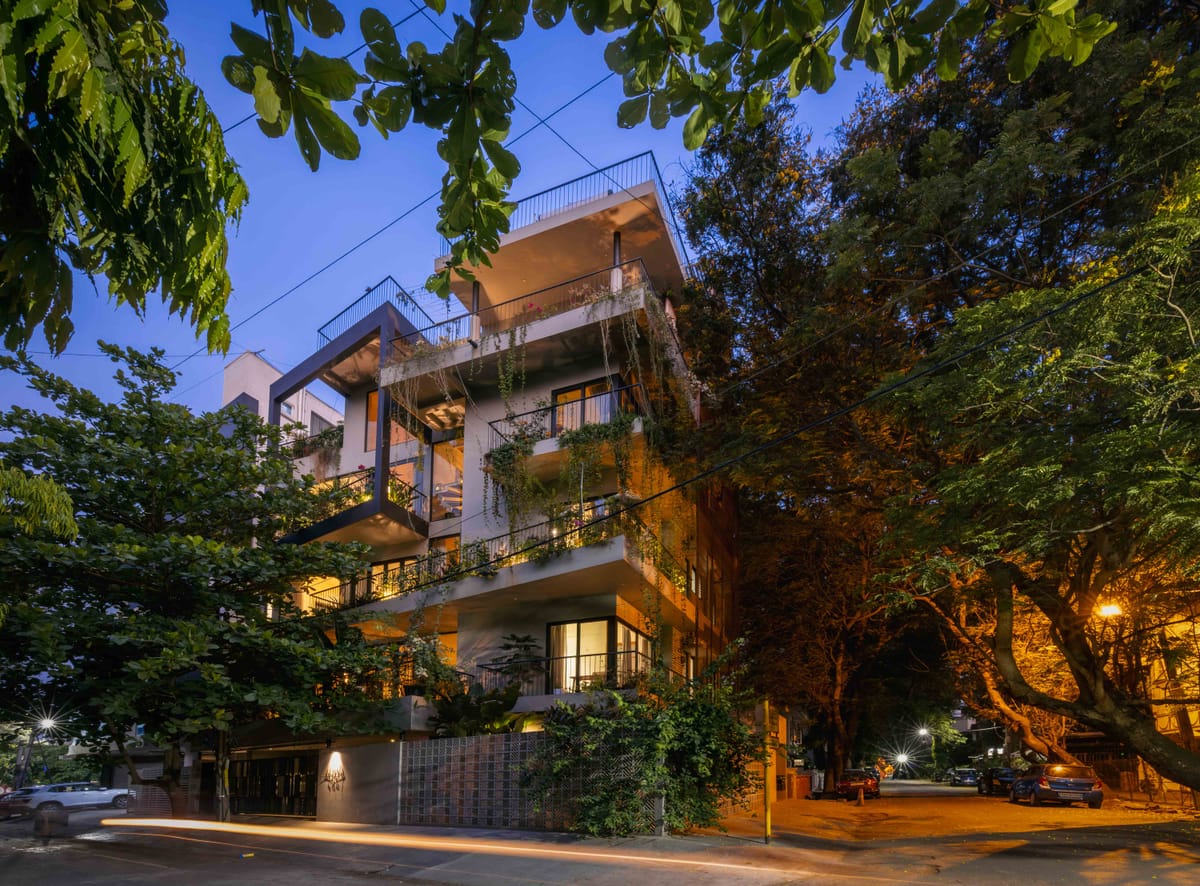
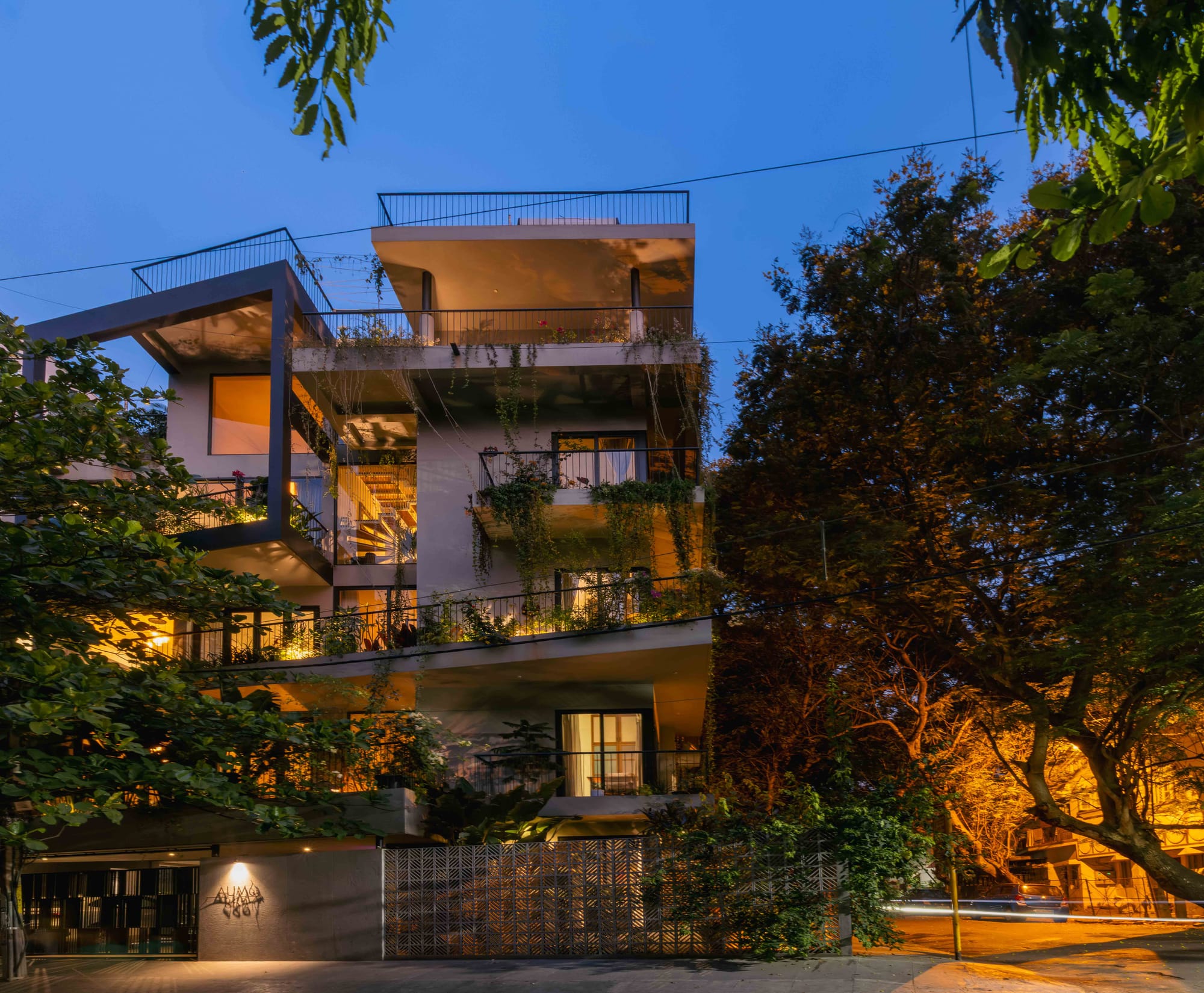
How can multiple generations continue living together in rapidly densifying cities without sacrificing either independence or community? As urban land becomes increasingly scarce, the conventional choices often narrow to detached houses that consume valuable land or apartment buildings that fragment family life. AUM House explores an alternative—a compact, vertical neighbourhood for a single extended family.
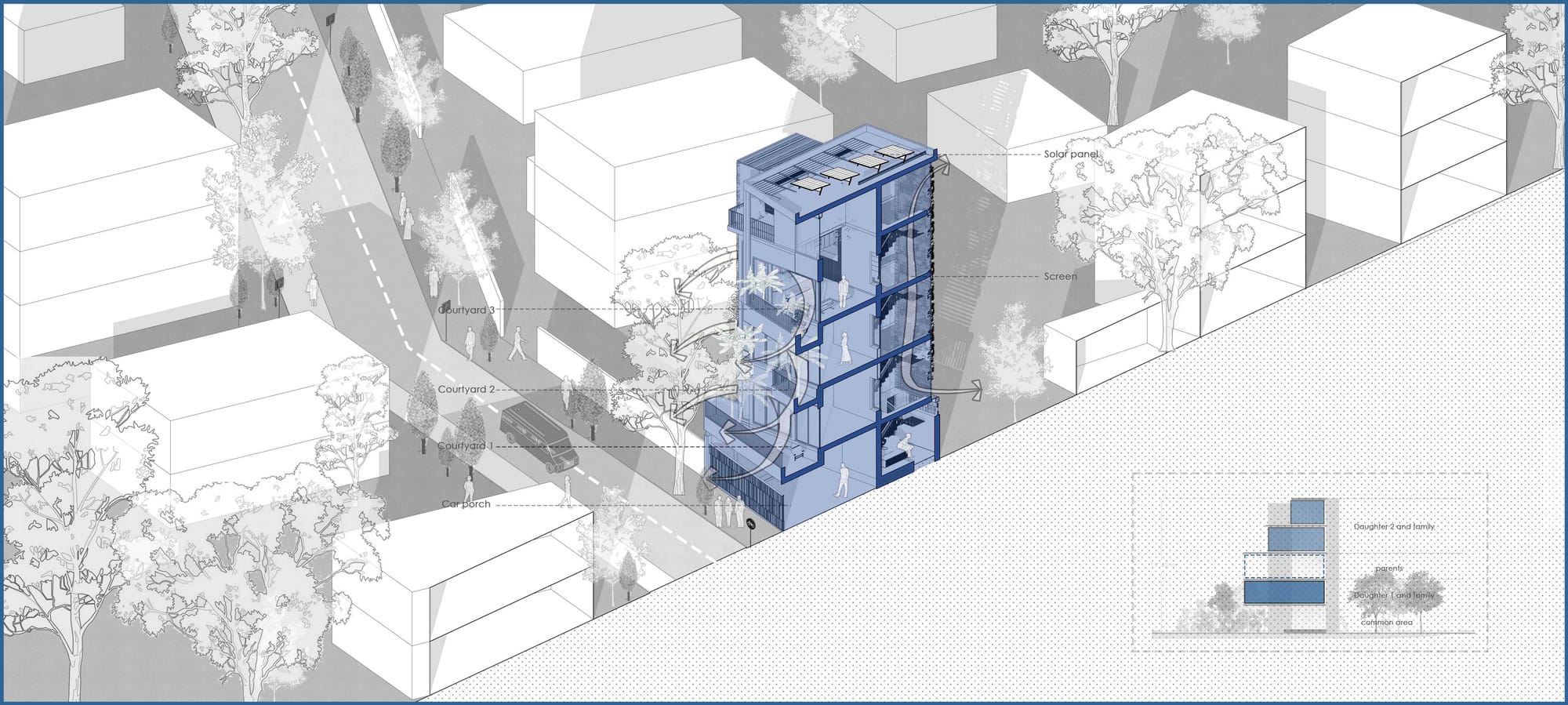
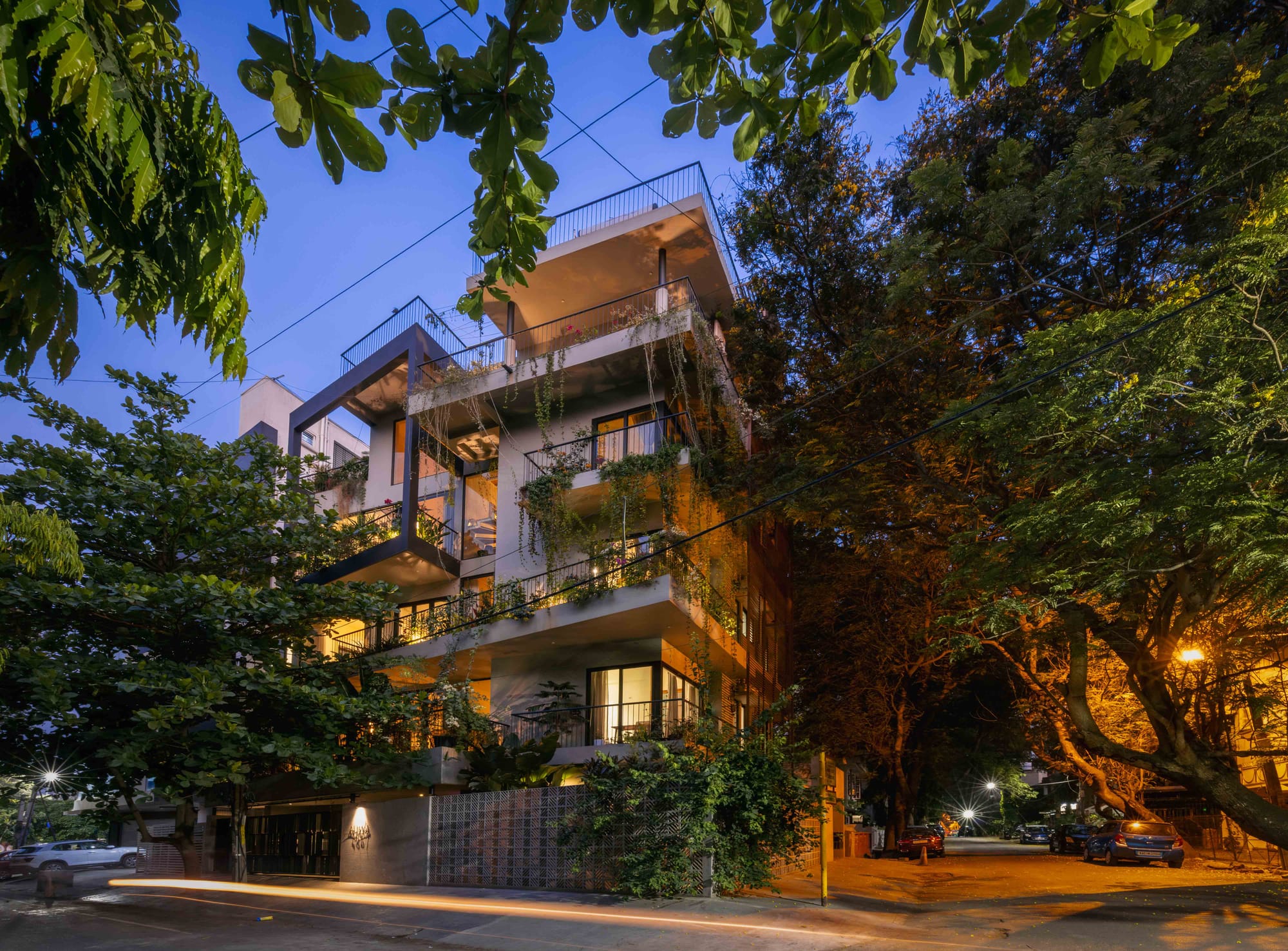
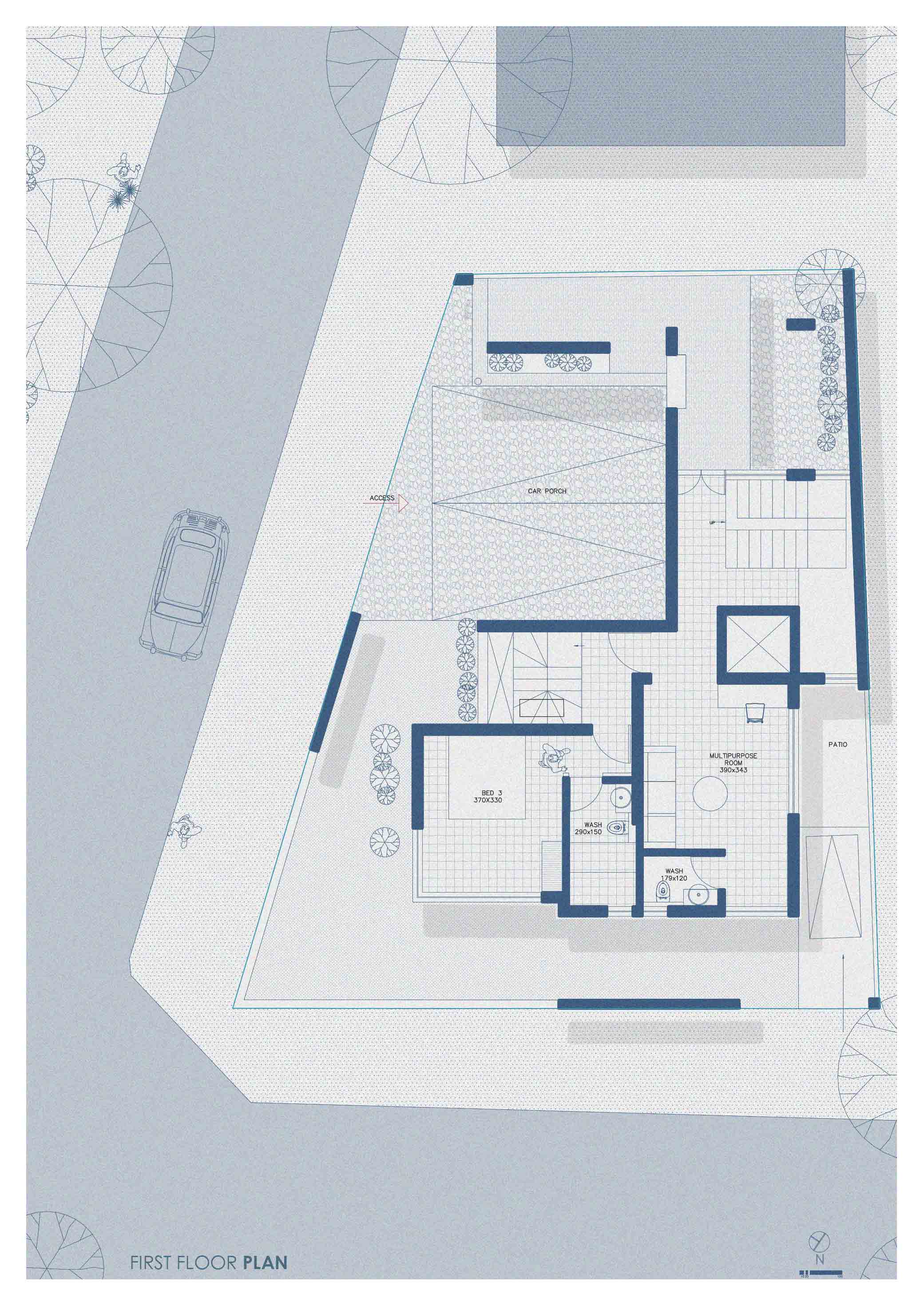
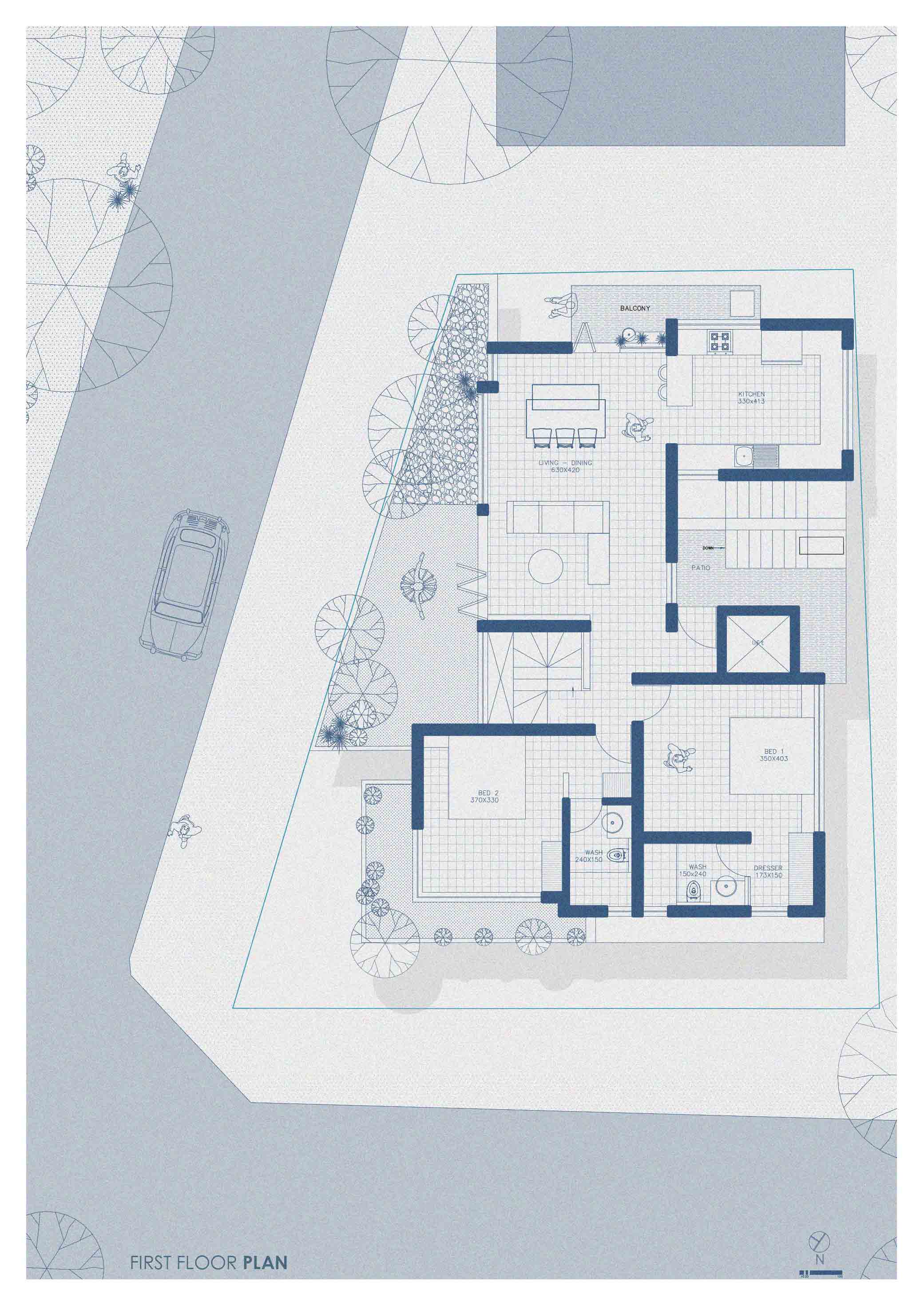
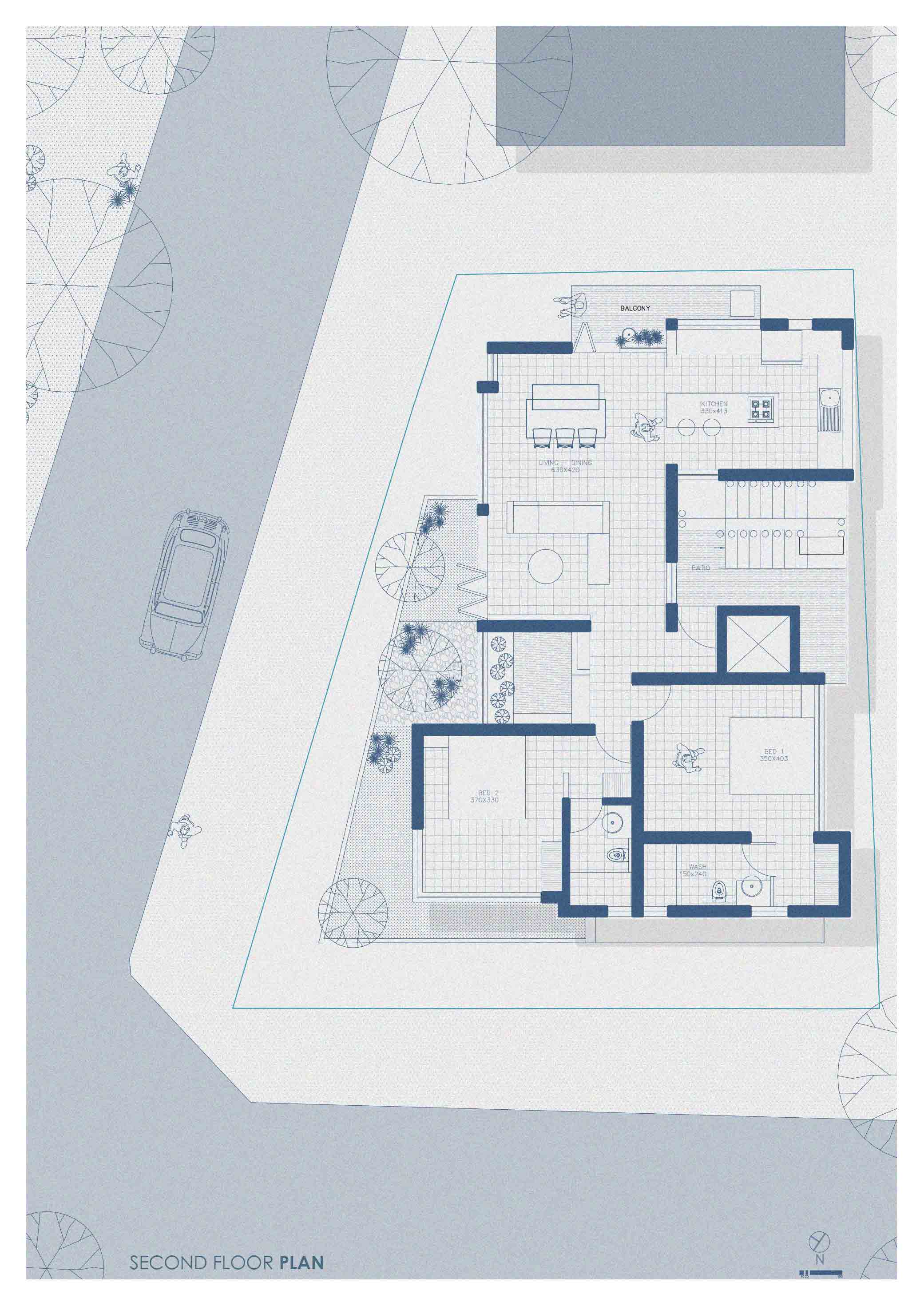
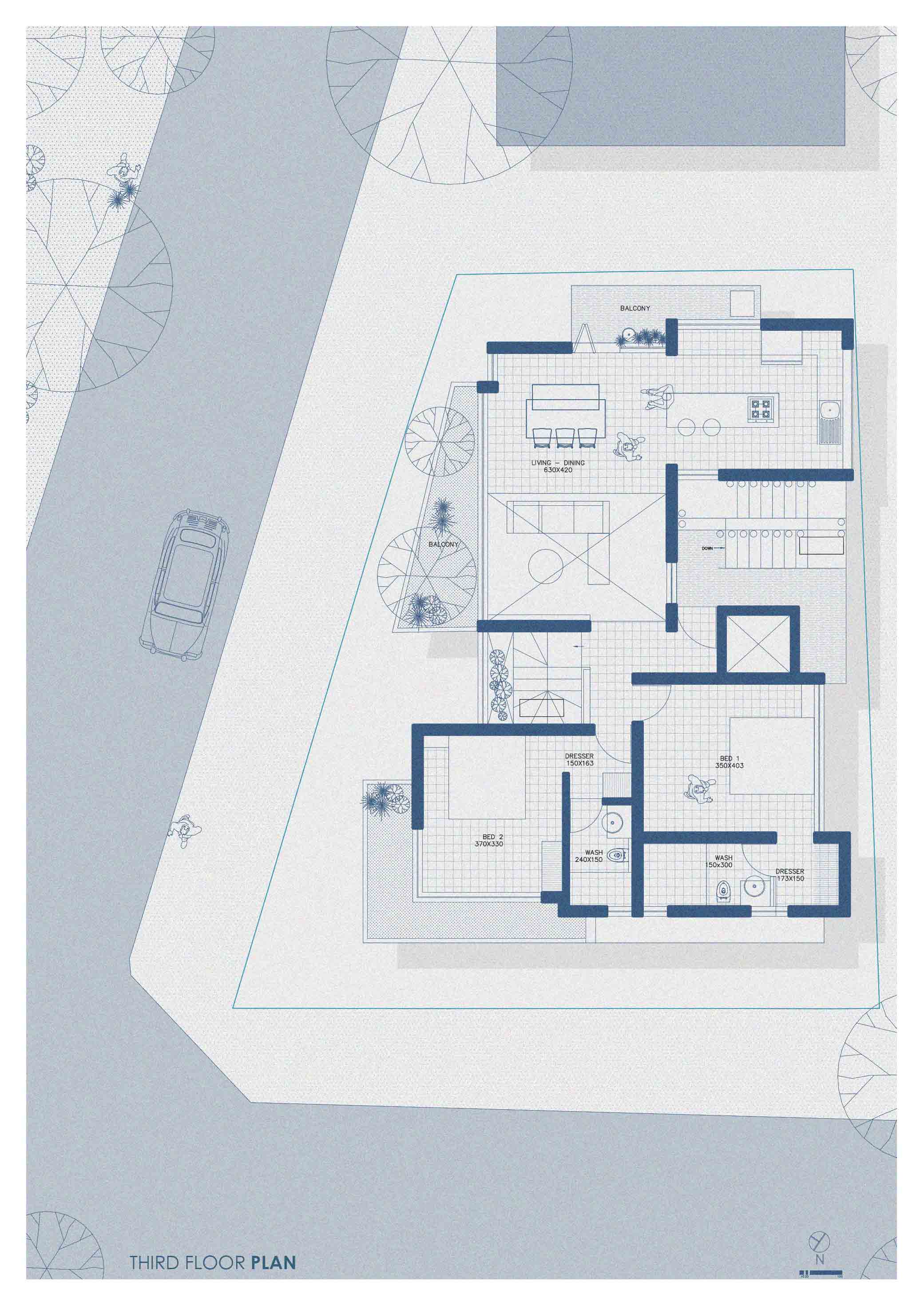
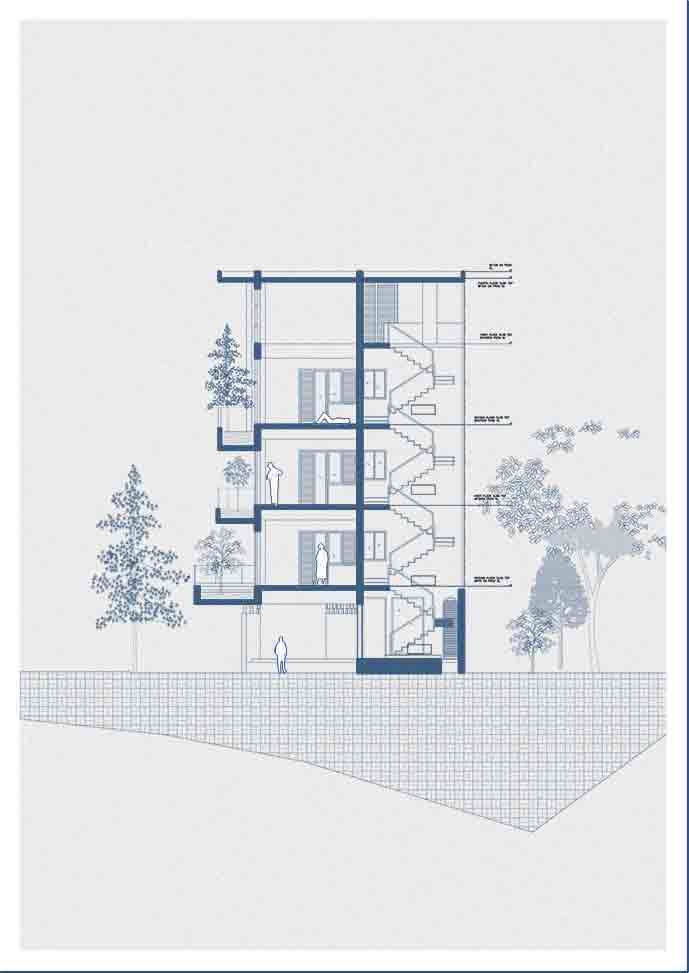
Located on a 60' × 40' corner site in Bengaluru, the residence accommodates seven family members across three independent homes while preserving the everyday relationships that define multi-generational living. Rather than stacking isolated apartments, the house is organized as two duplex residences occupied by the daughters, with the parents' home positioned between them. This spatial arrangement transforms the parents into the physical and social heart of the house, naturally connecting the family without diminishing the autonomy of each household.
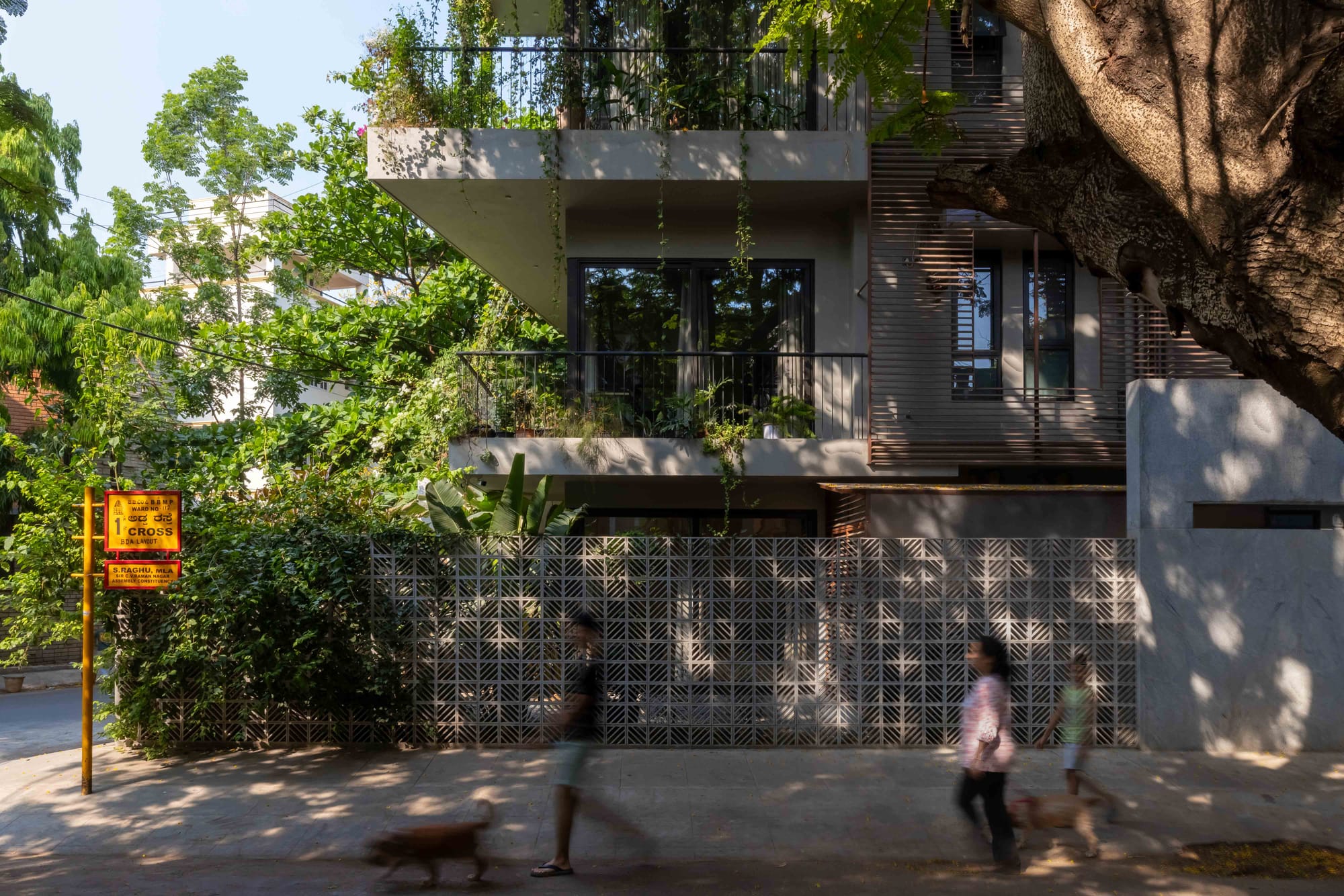
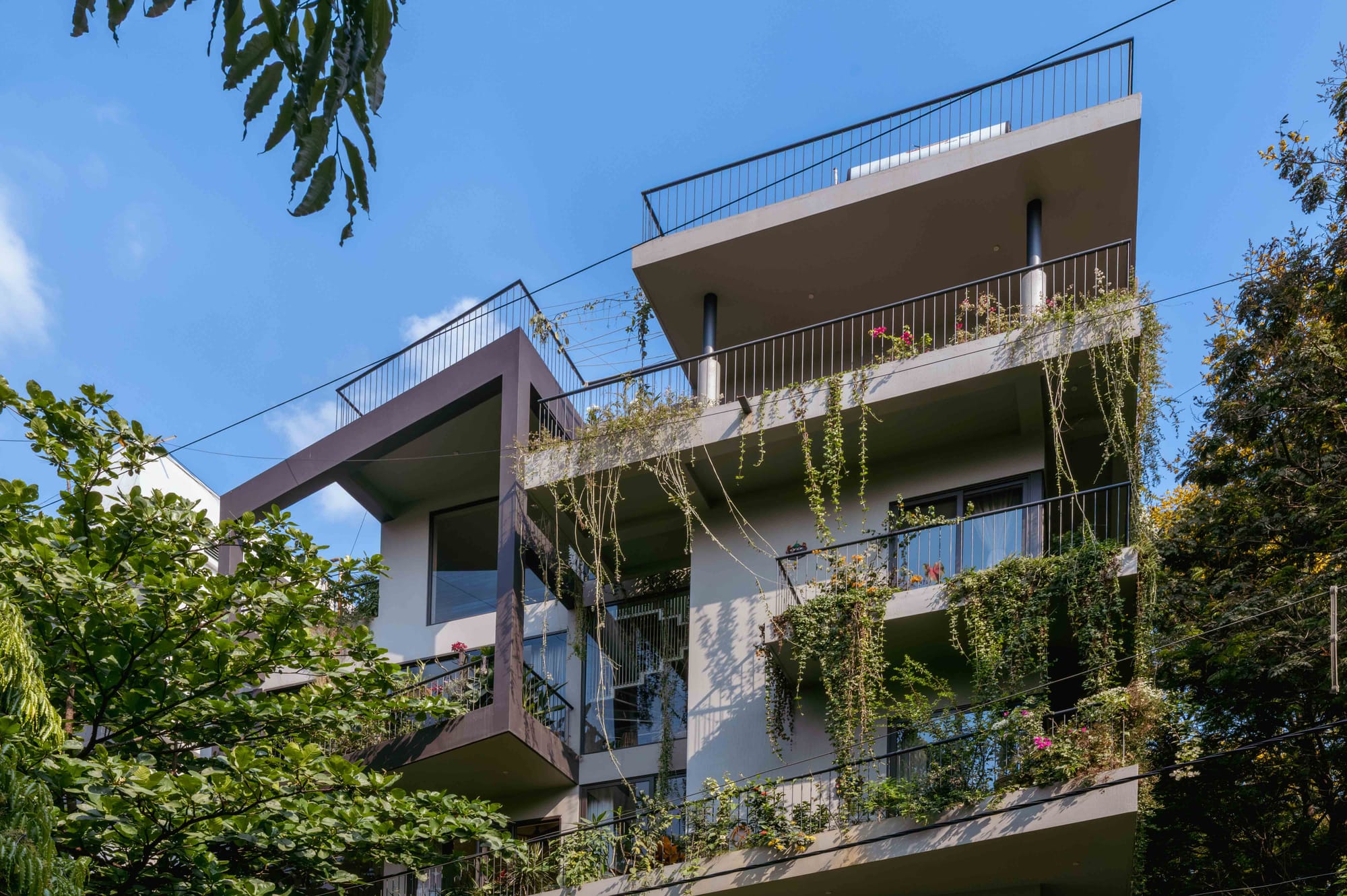
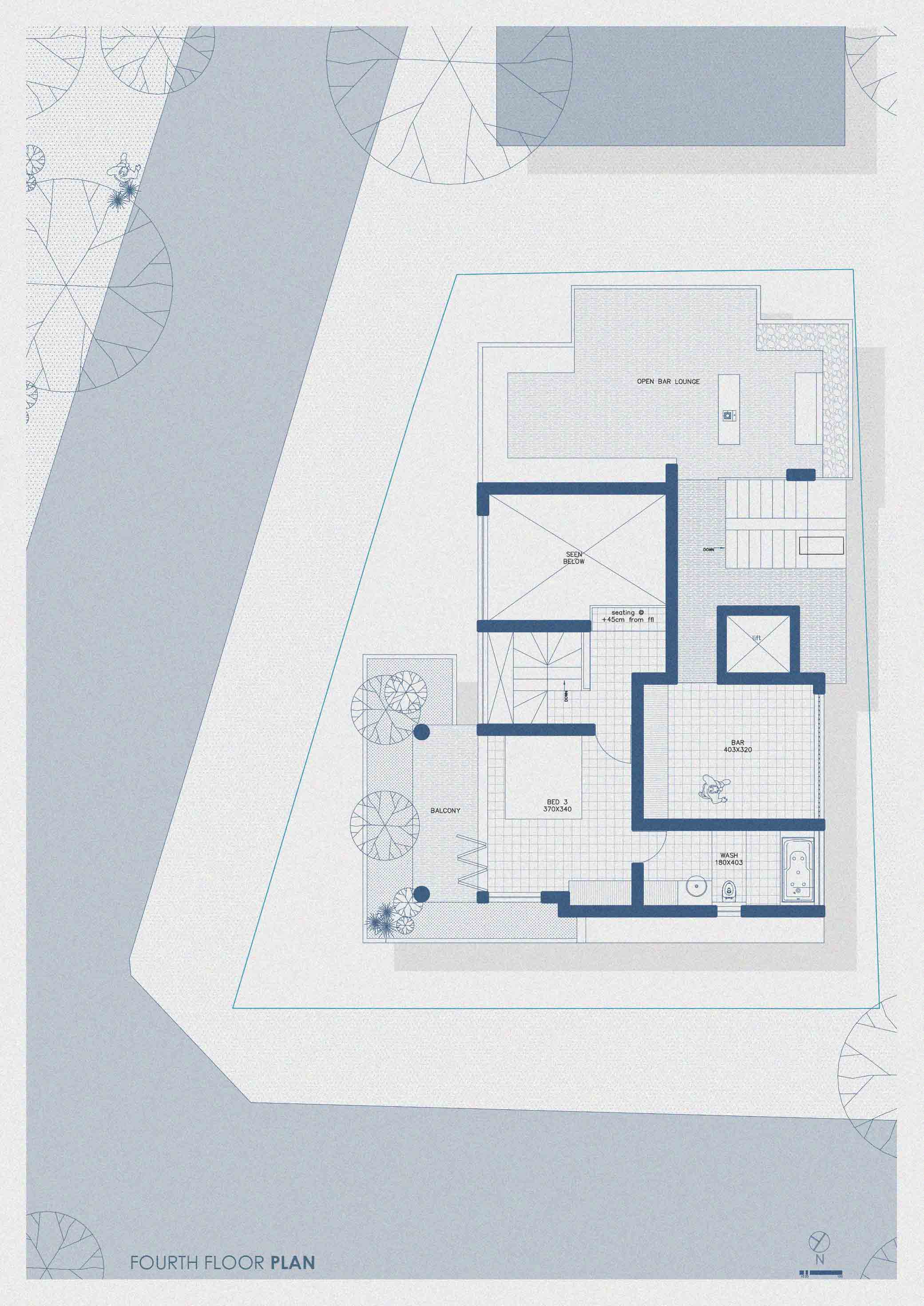
The project challenges the notion that density must result in anonymity. Instead, it proposes a layered sequence of shared and private spaces that encourage interaction while respecting individual lifestyles. The ground floor functions as a collective threshold, combining the entrance, a shared lounge, and informal meeting spaces where friends, extended family, and professional visitors can be received without disturbing the privacy of the homes above. At the opposite end of the building, an open terrace lounge and garden become the family's common destination, providing a place for celebrations, conversations, and everyday gatherings.
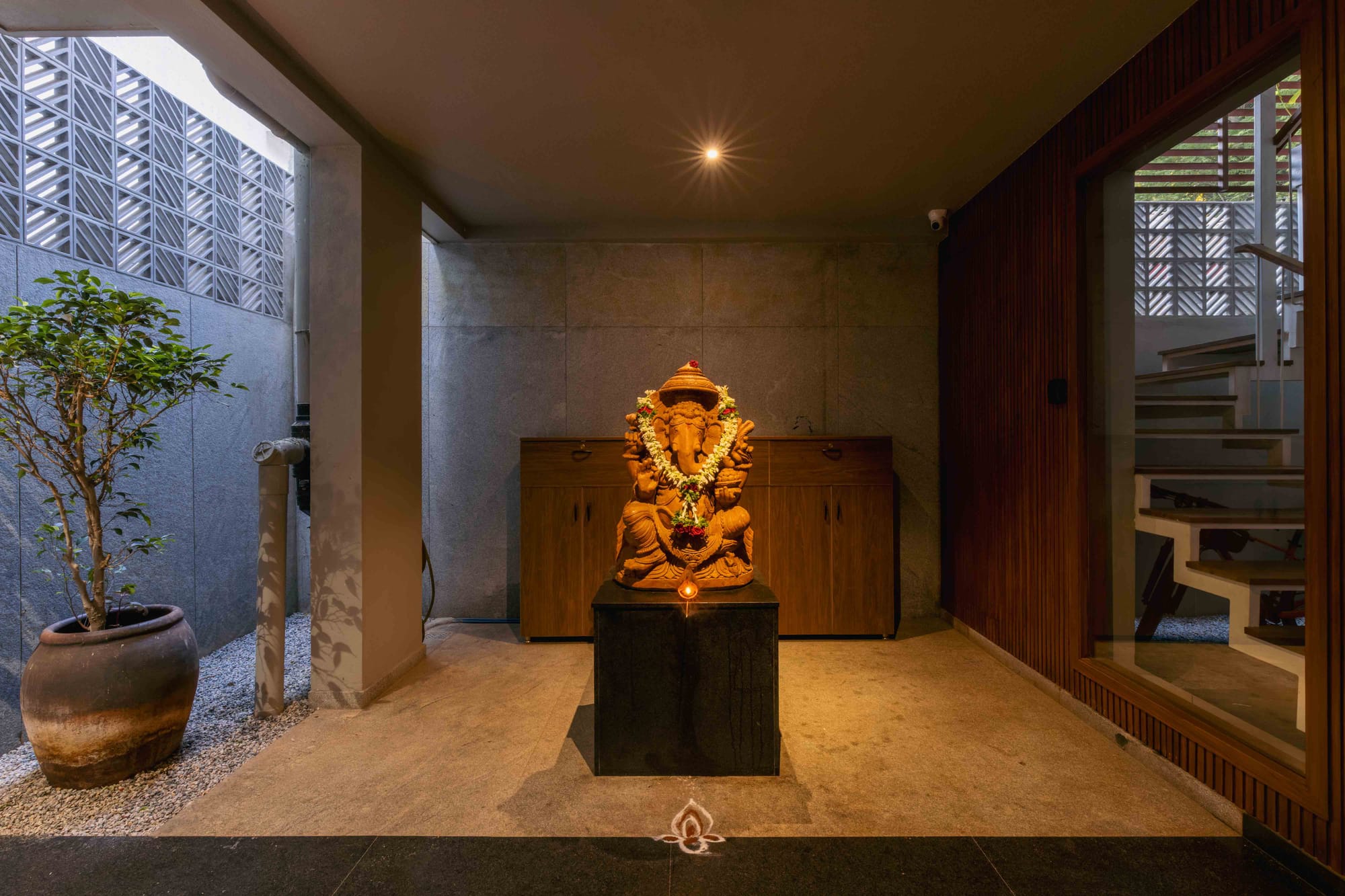
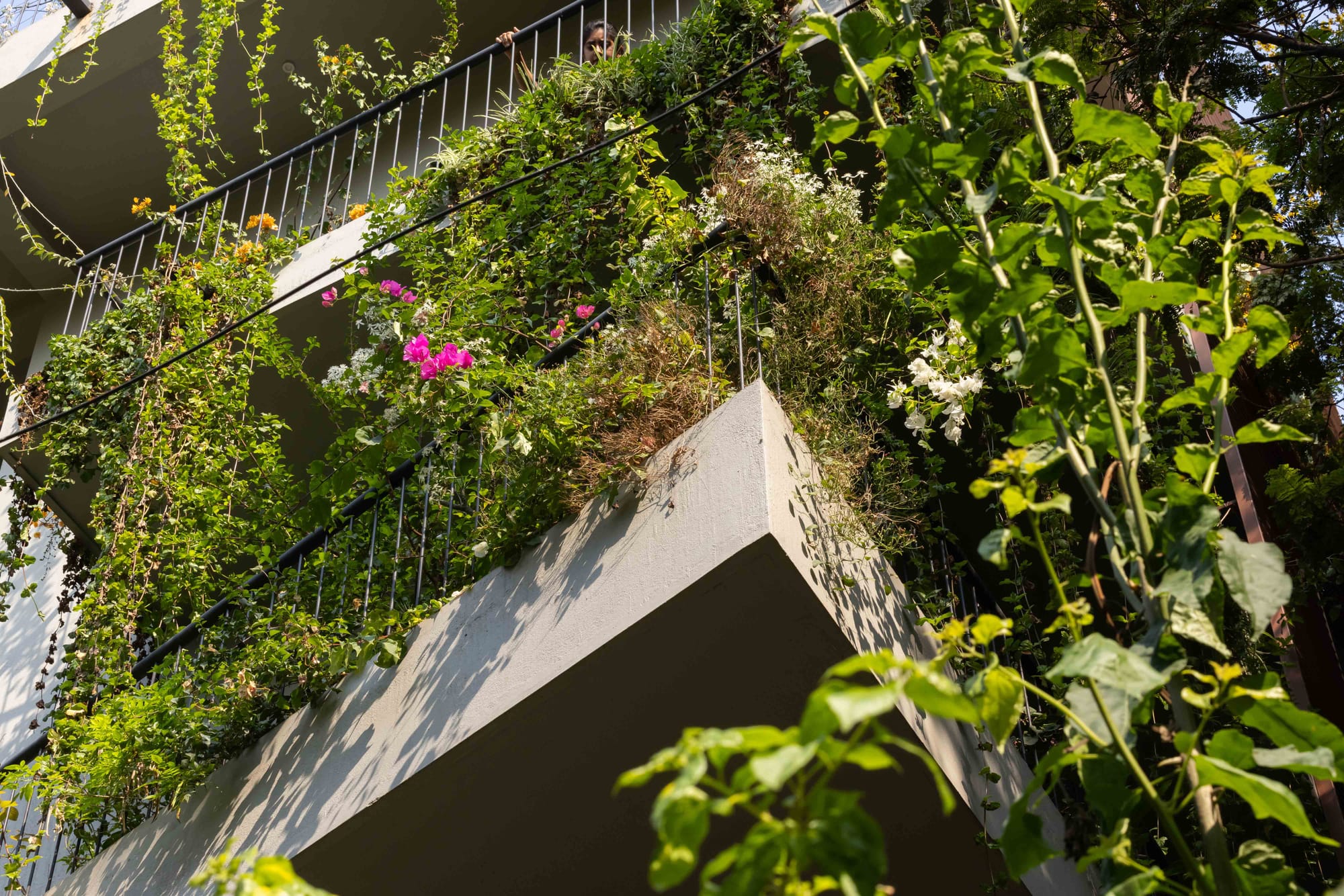
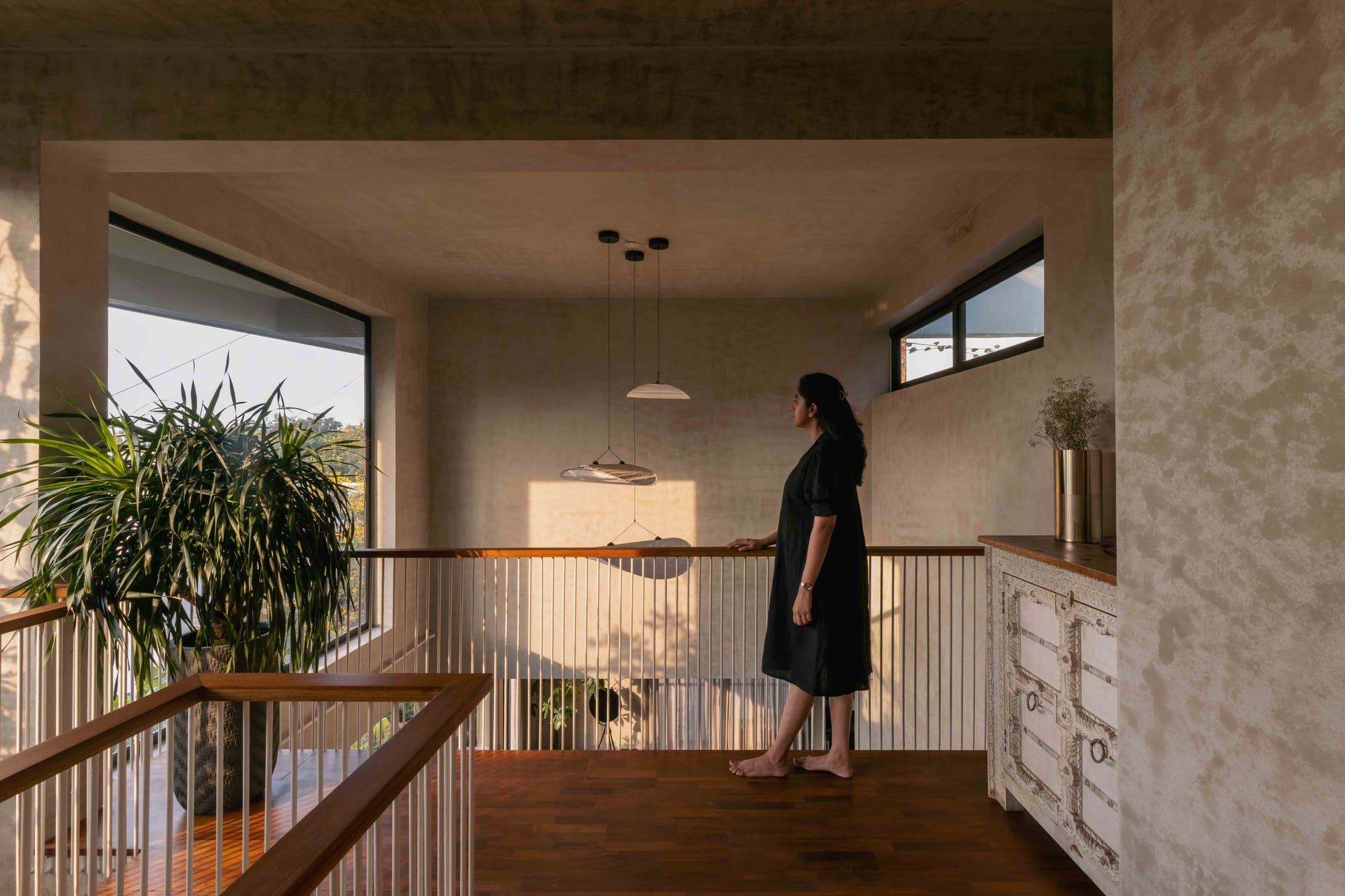
Between these shared anchors, every dwelling extends into generous landscaped terraces that become outdoor rooms rather than conventional balconies. Designed to support mature trees and layered planting, these terraces establish visual connections between successive levels, allowing everyday life to unfold across the building. Family members remain visually connected through gardens, movement, and seasonal changes, creating moments of spontaneous interaction while maintaining comfortable degrees of privacy. The result is a vertical community where architecture encourages awareness rather than isolation.
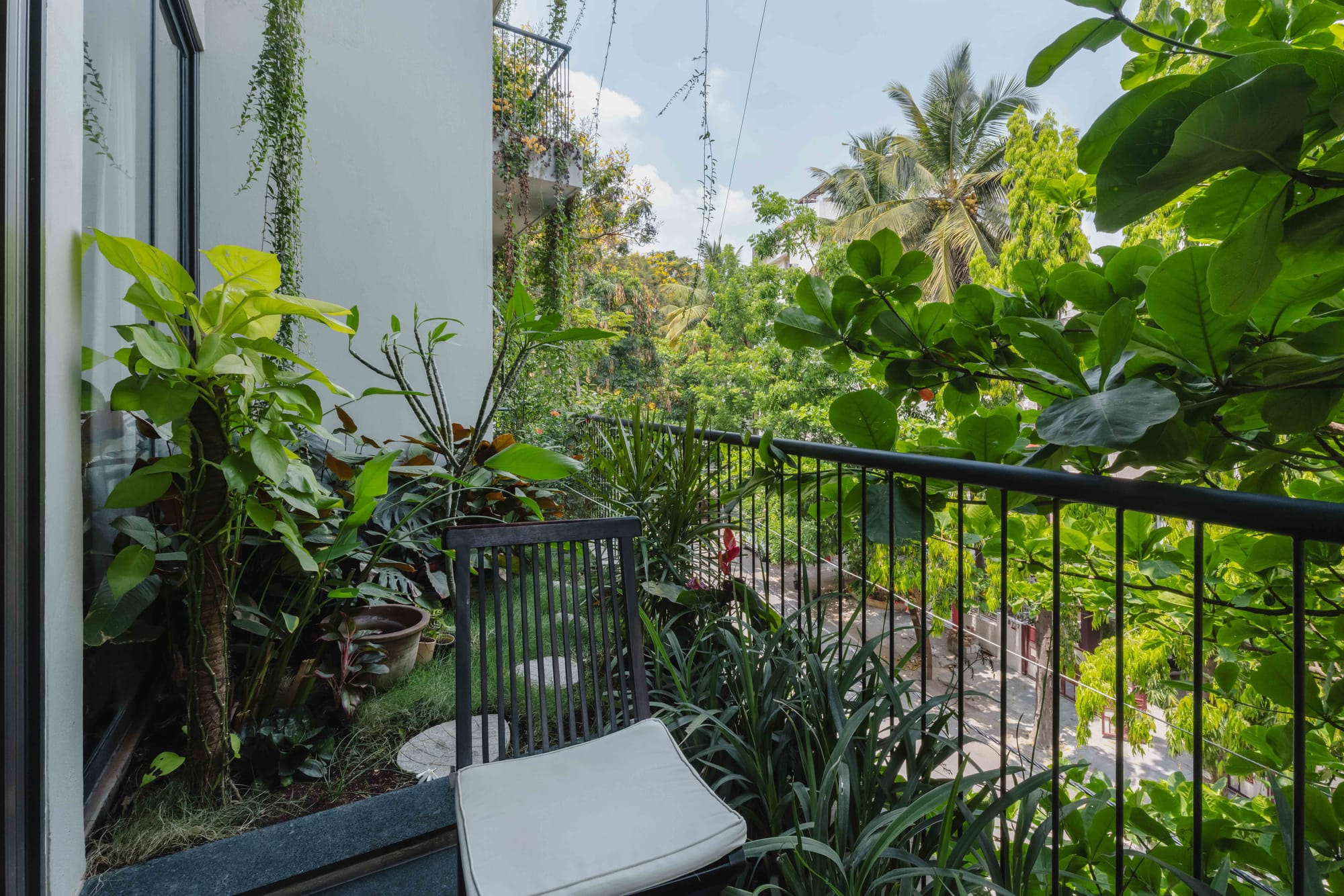
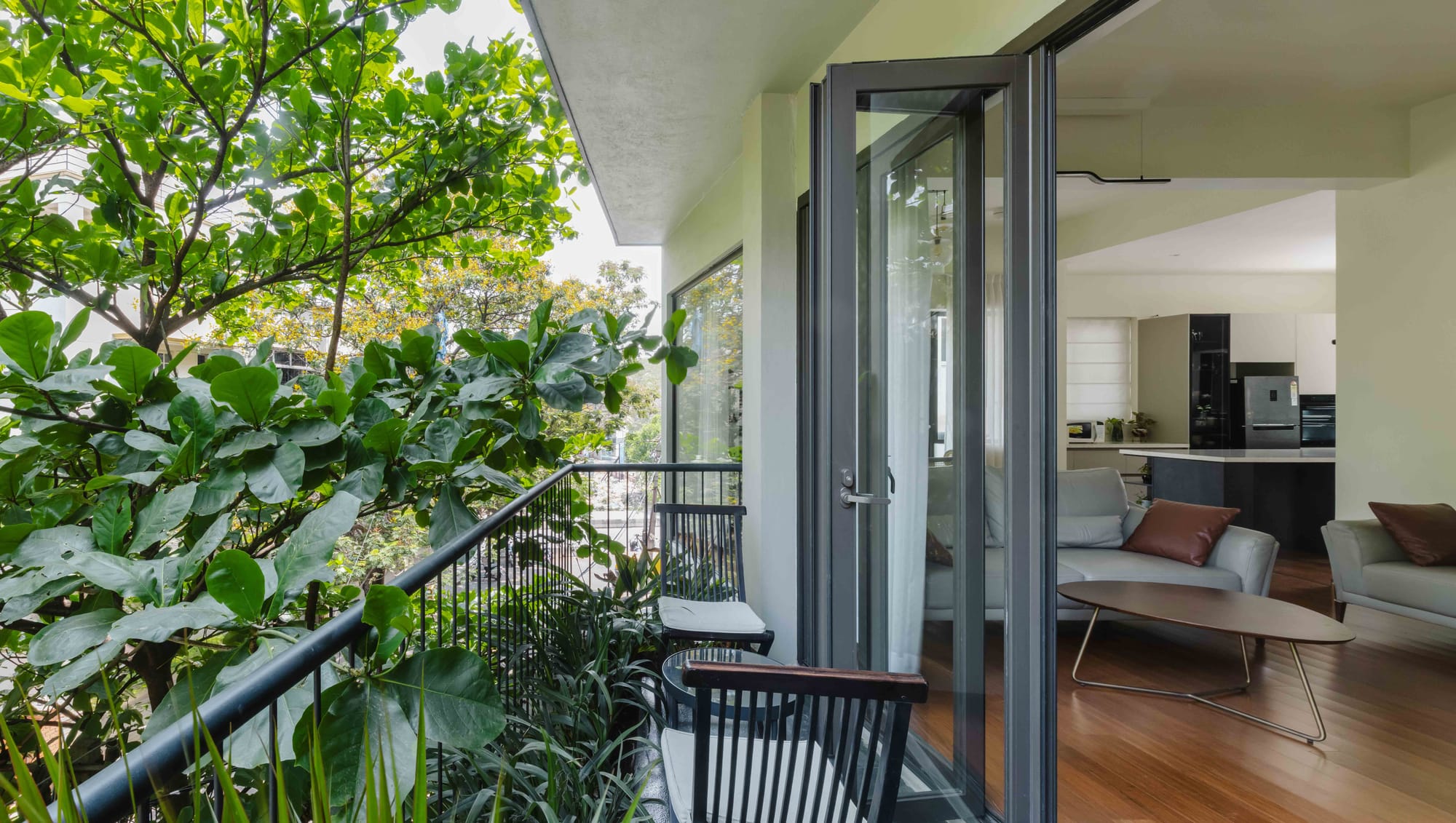
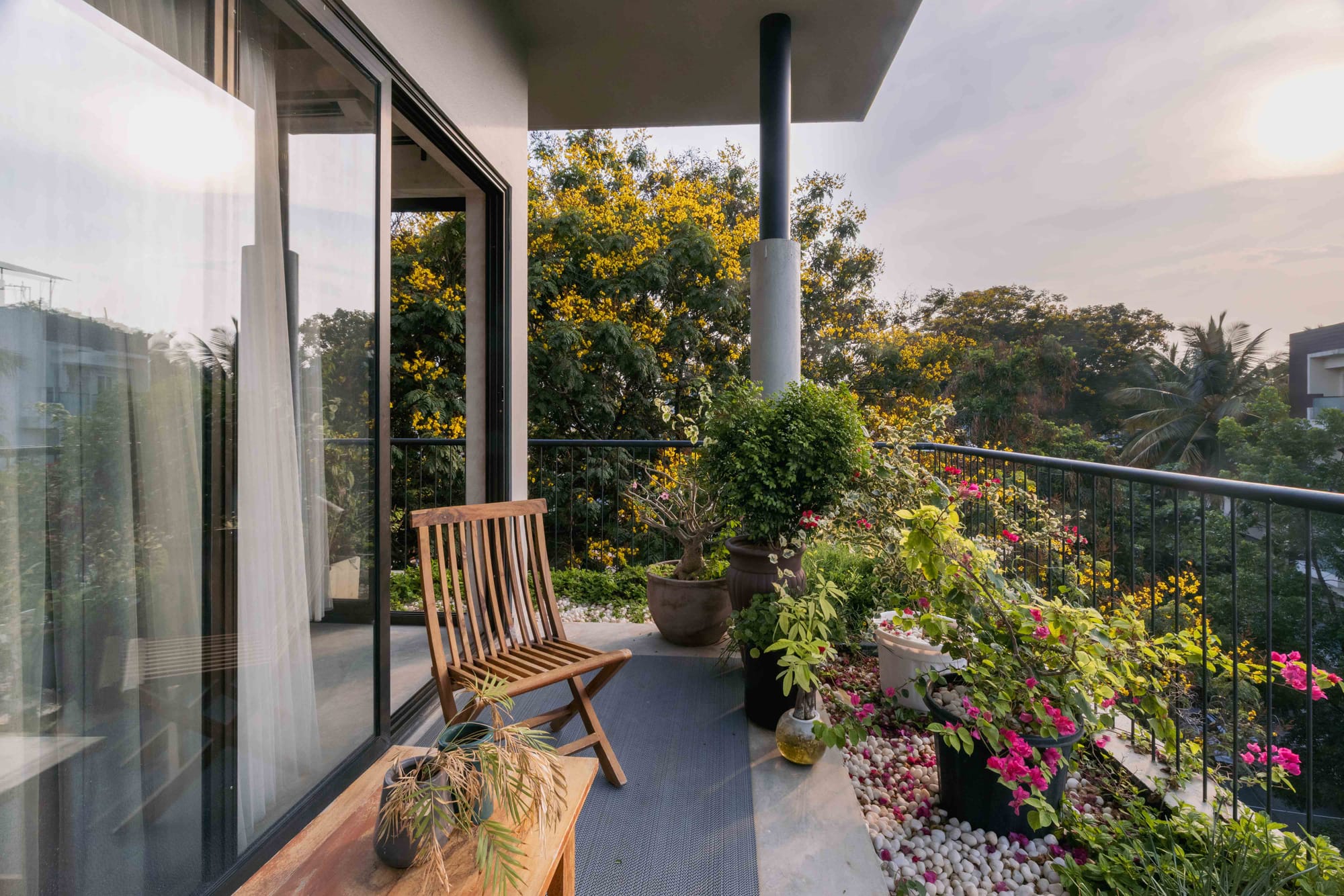
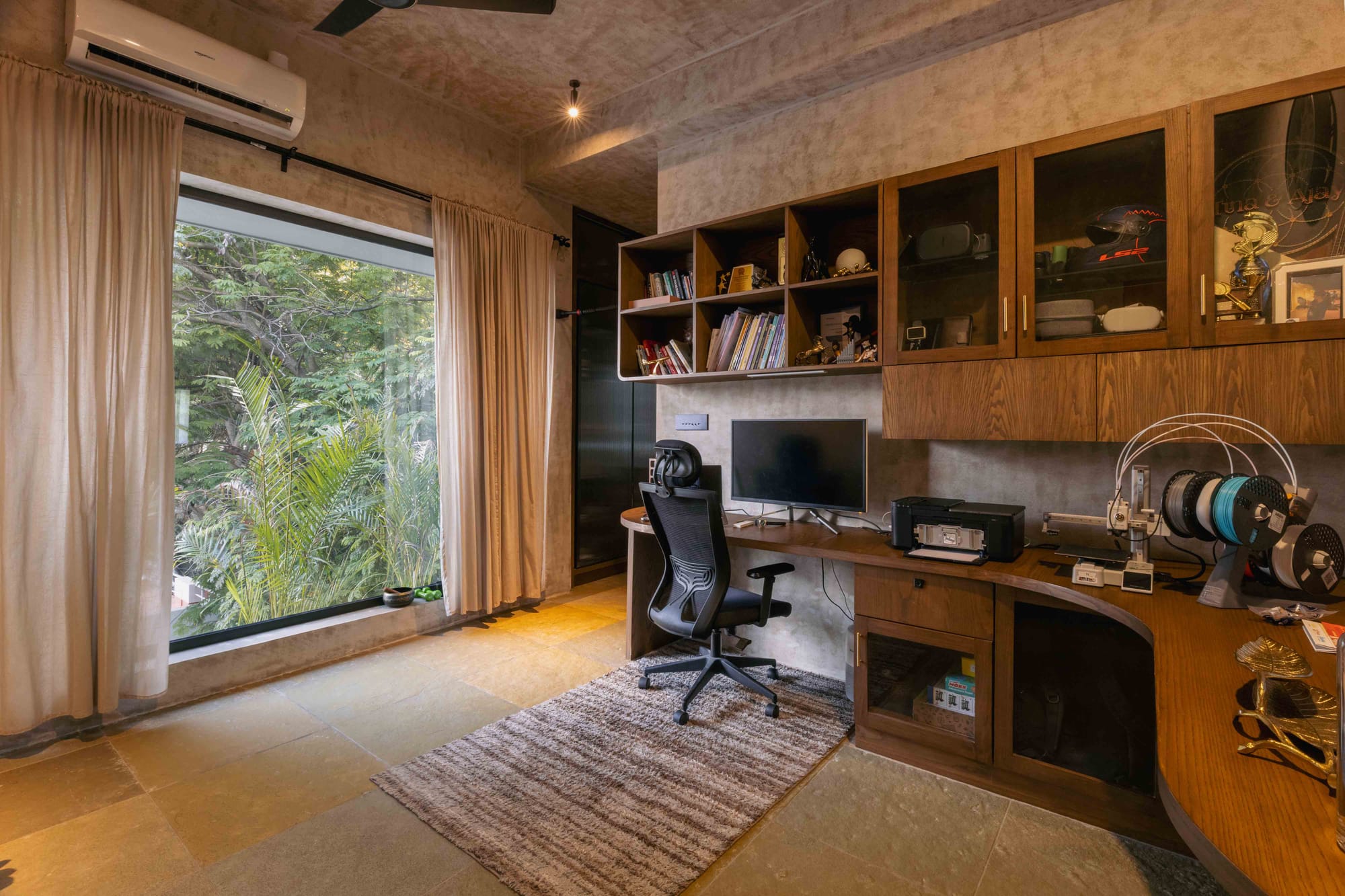
Although the residences share a common architectural framework, each home is individually tailored to reflect the personality and lifestyle of its occupants. Interior materials, colours, and furnishings differ from one dwelling to another, reinforcing the idea that collective living does not require uniformity.
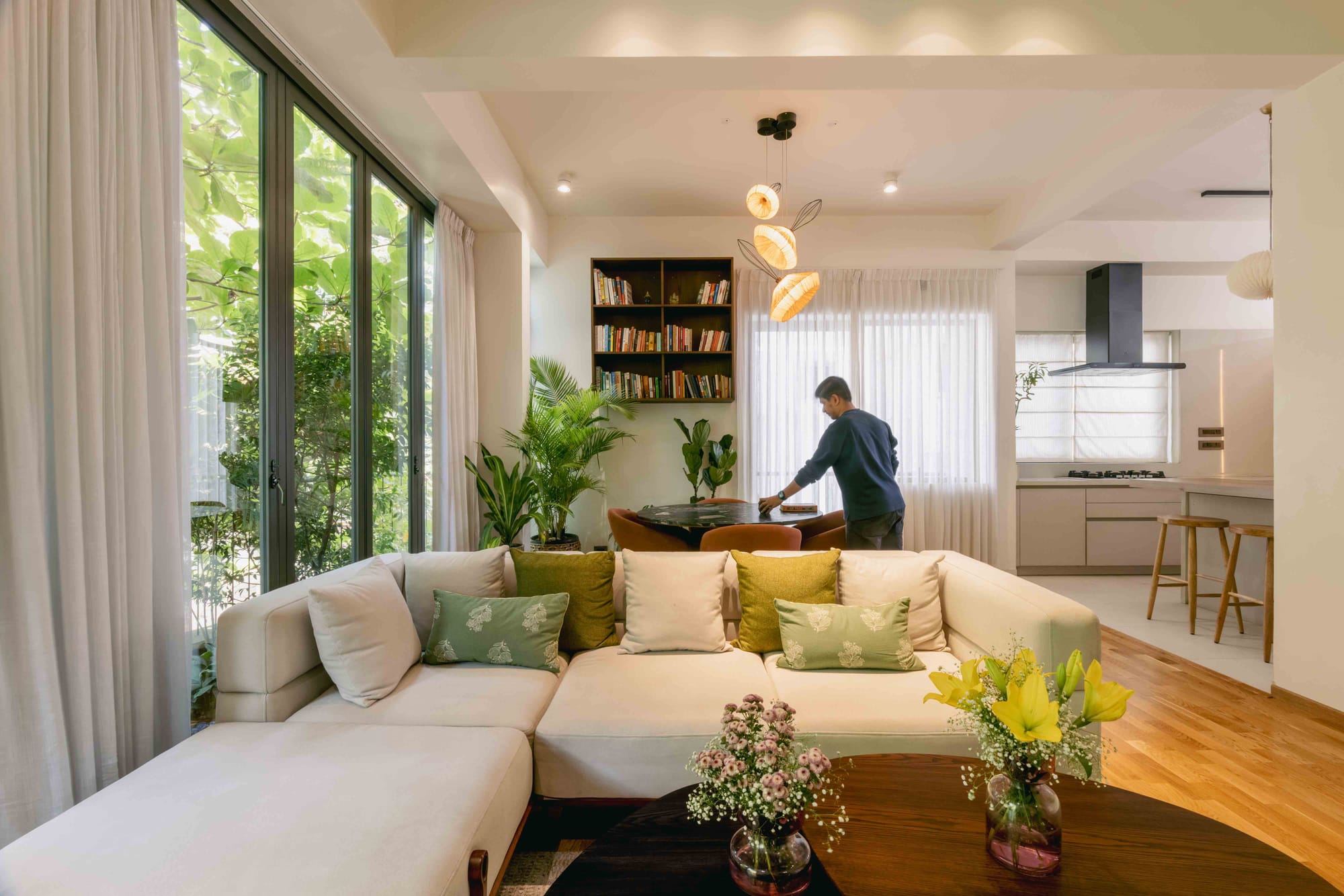
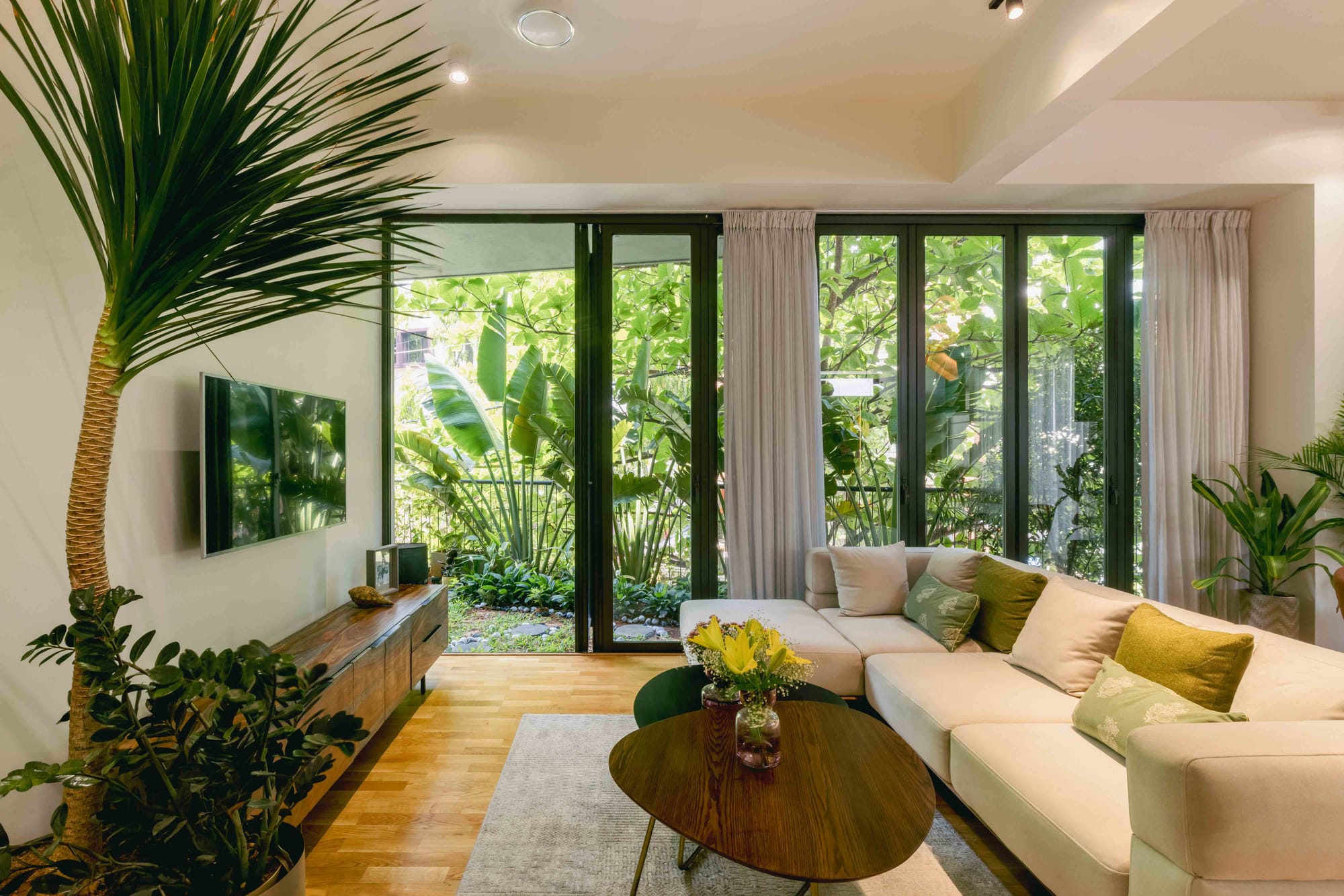
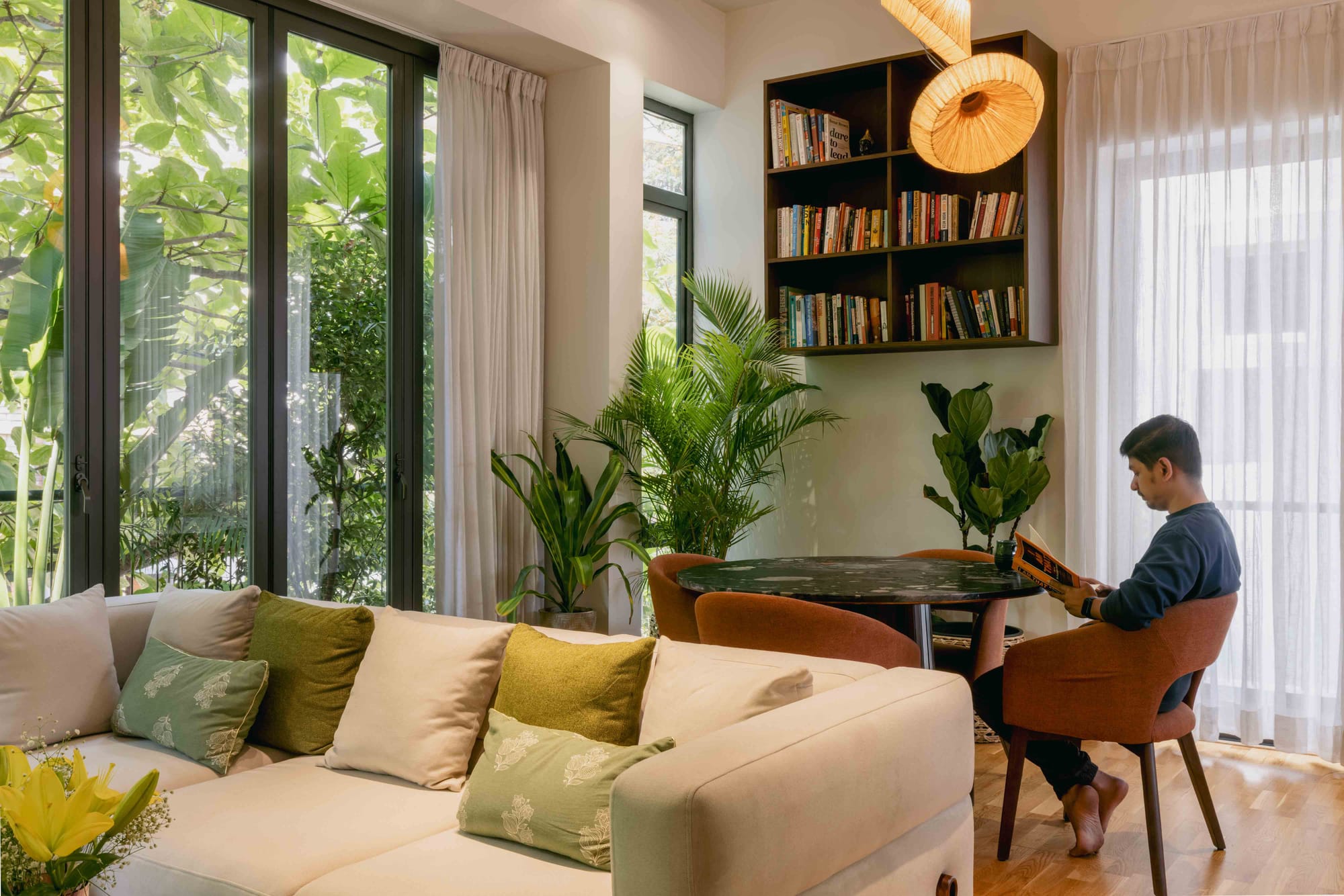
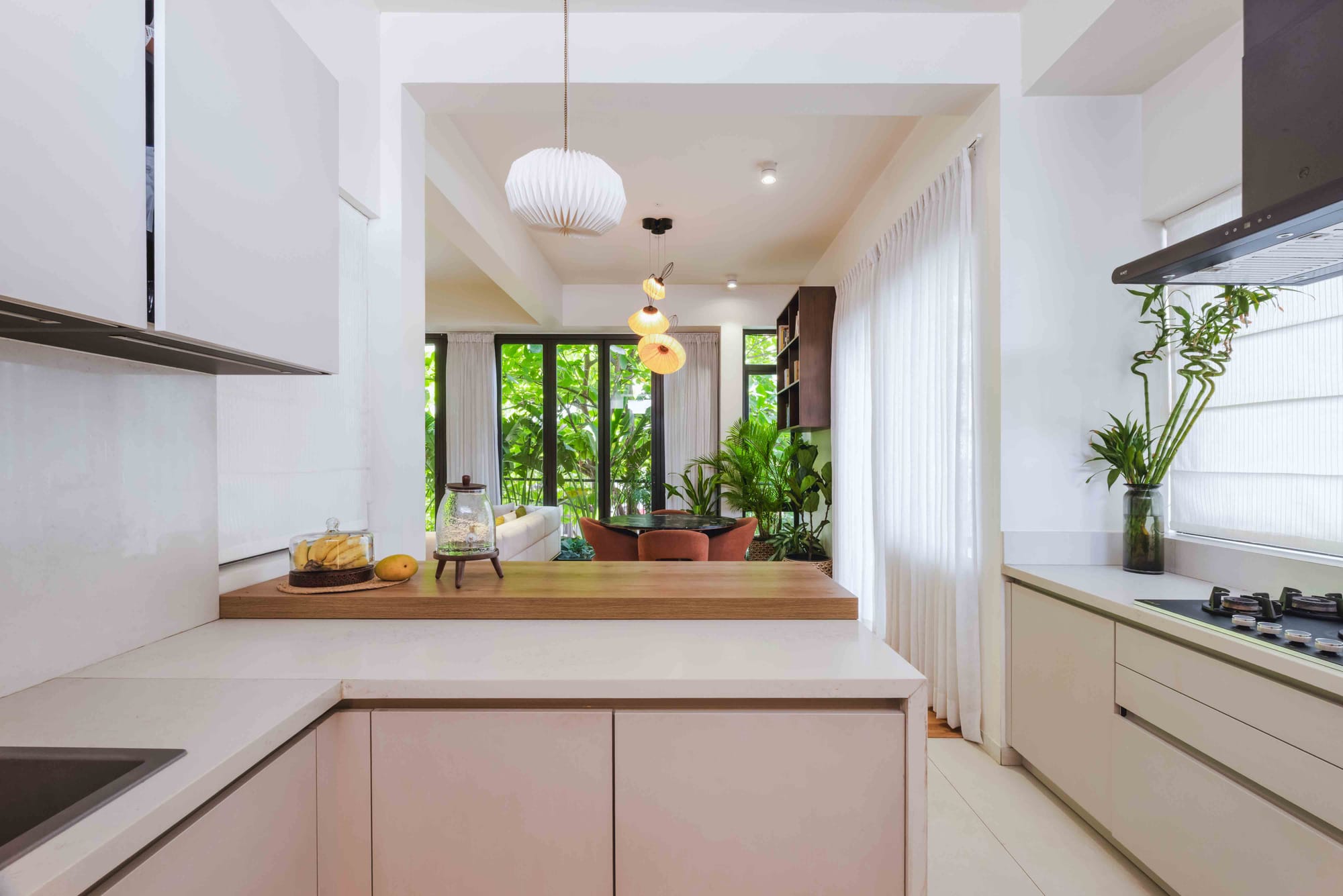
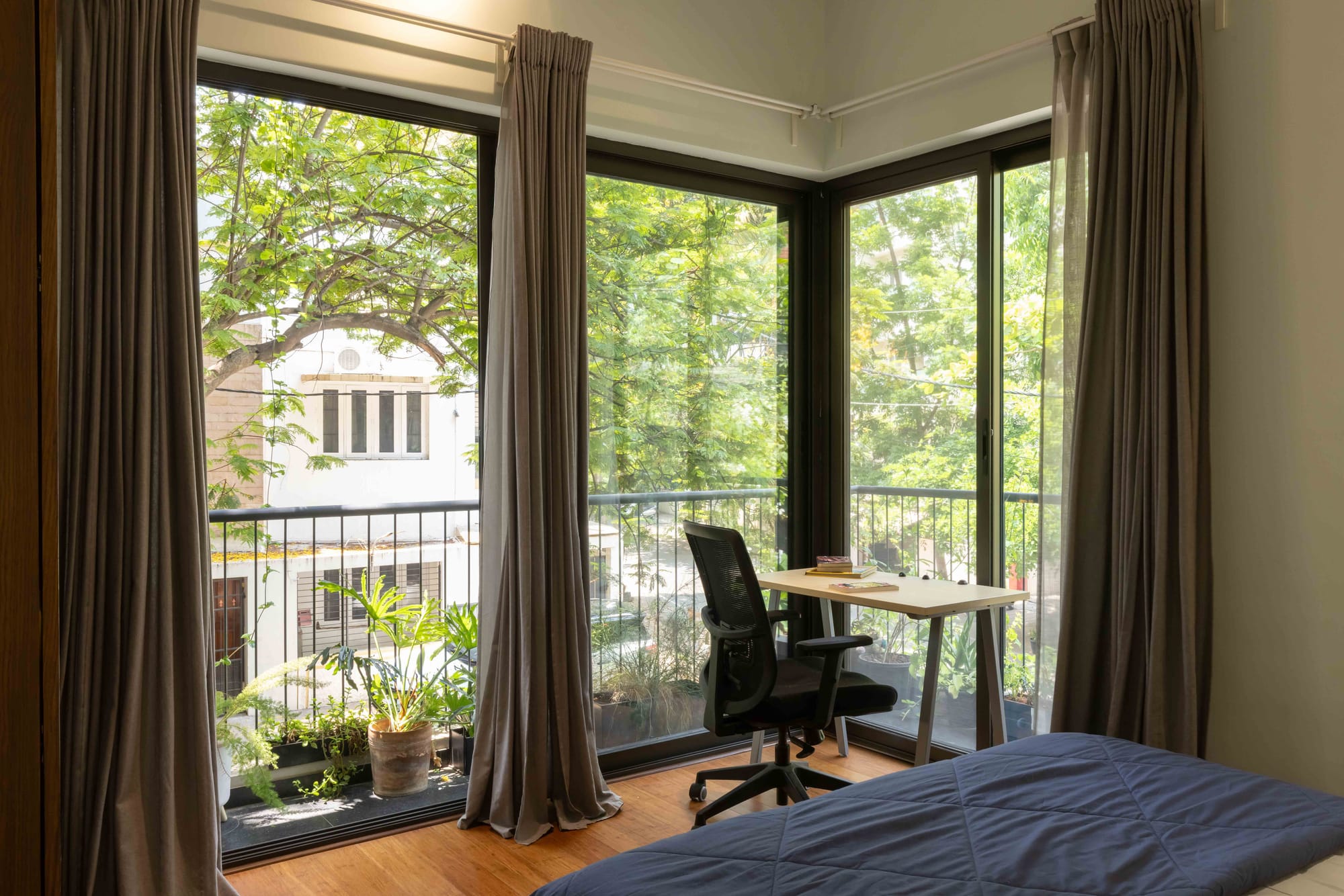
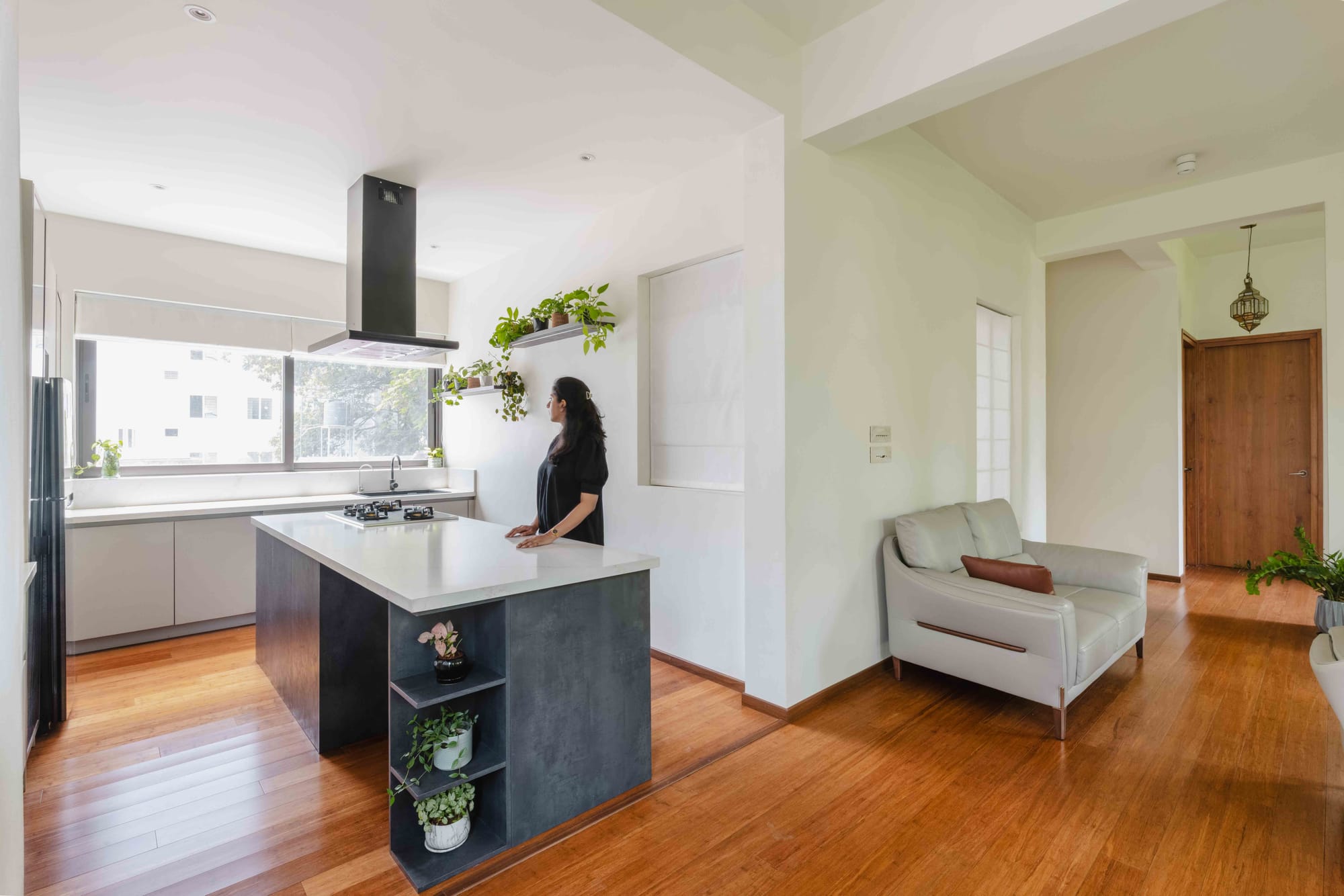
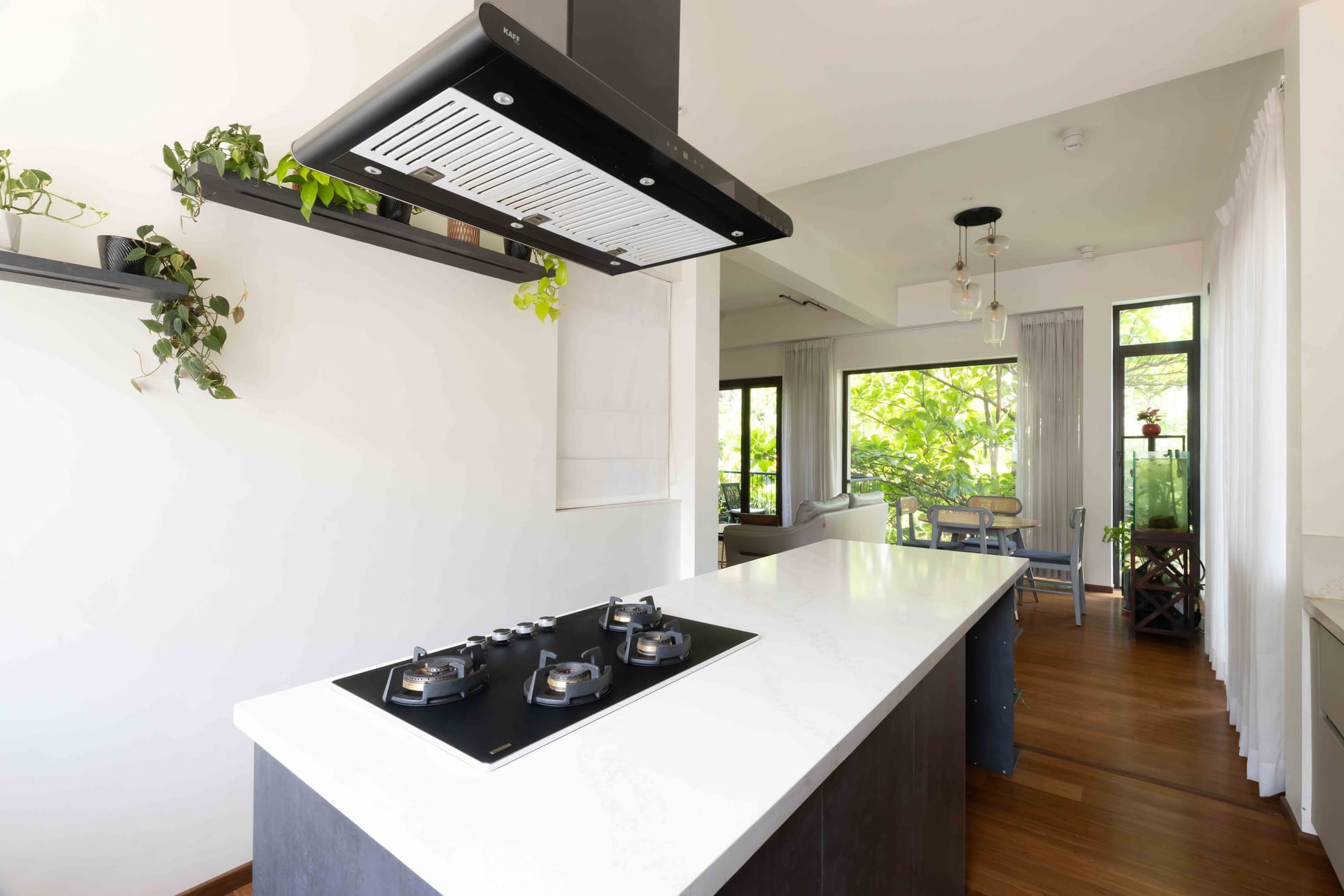
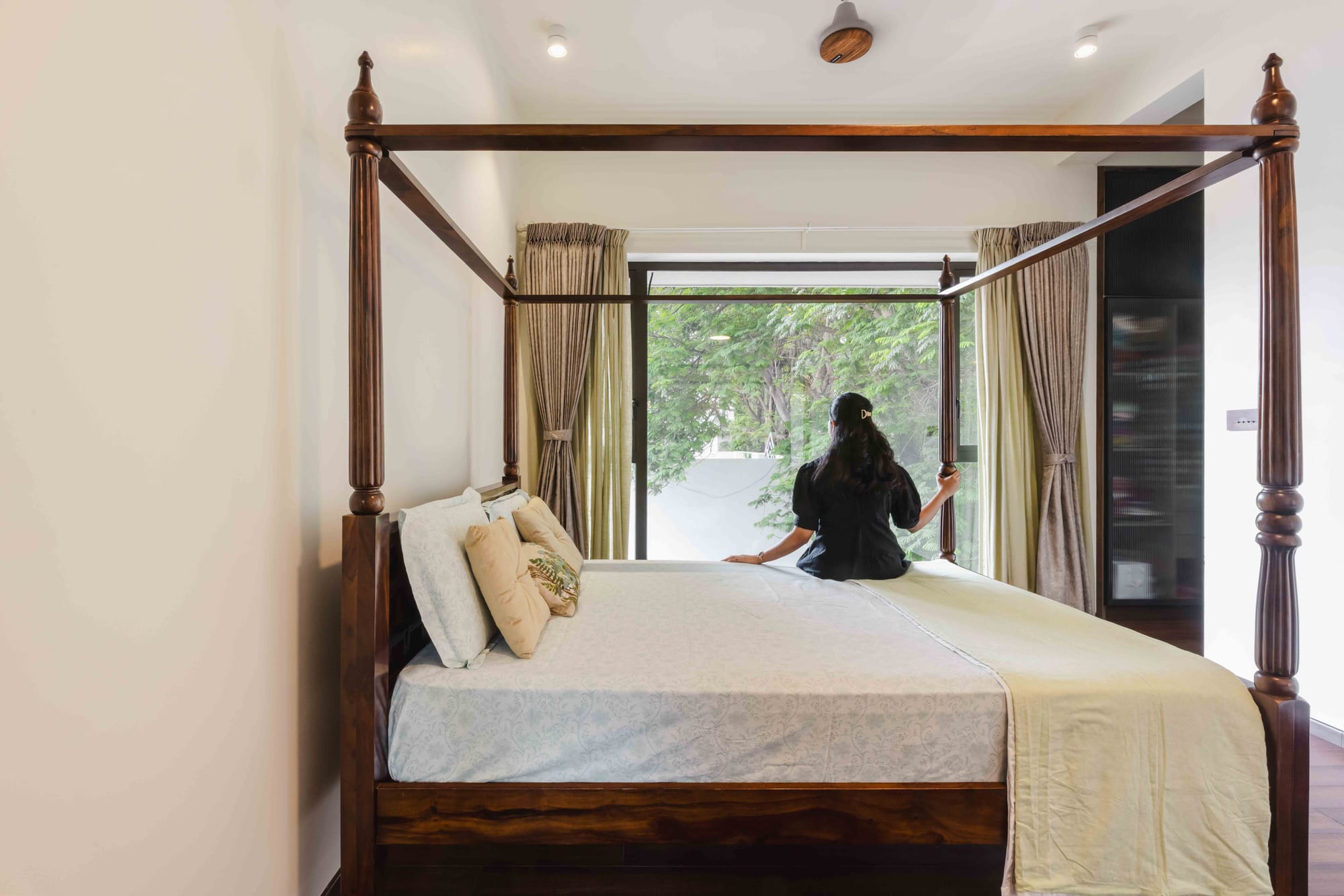
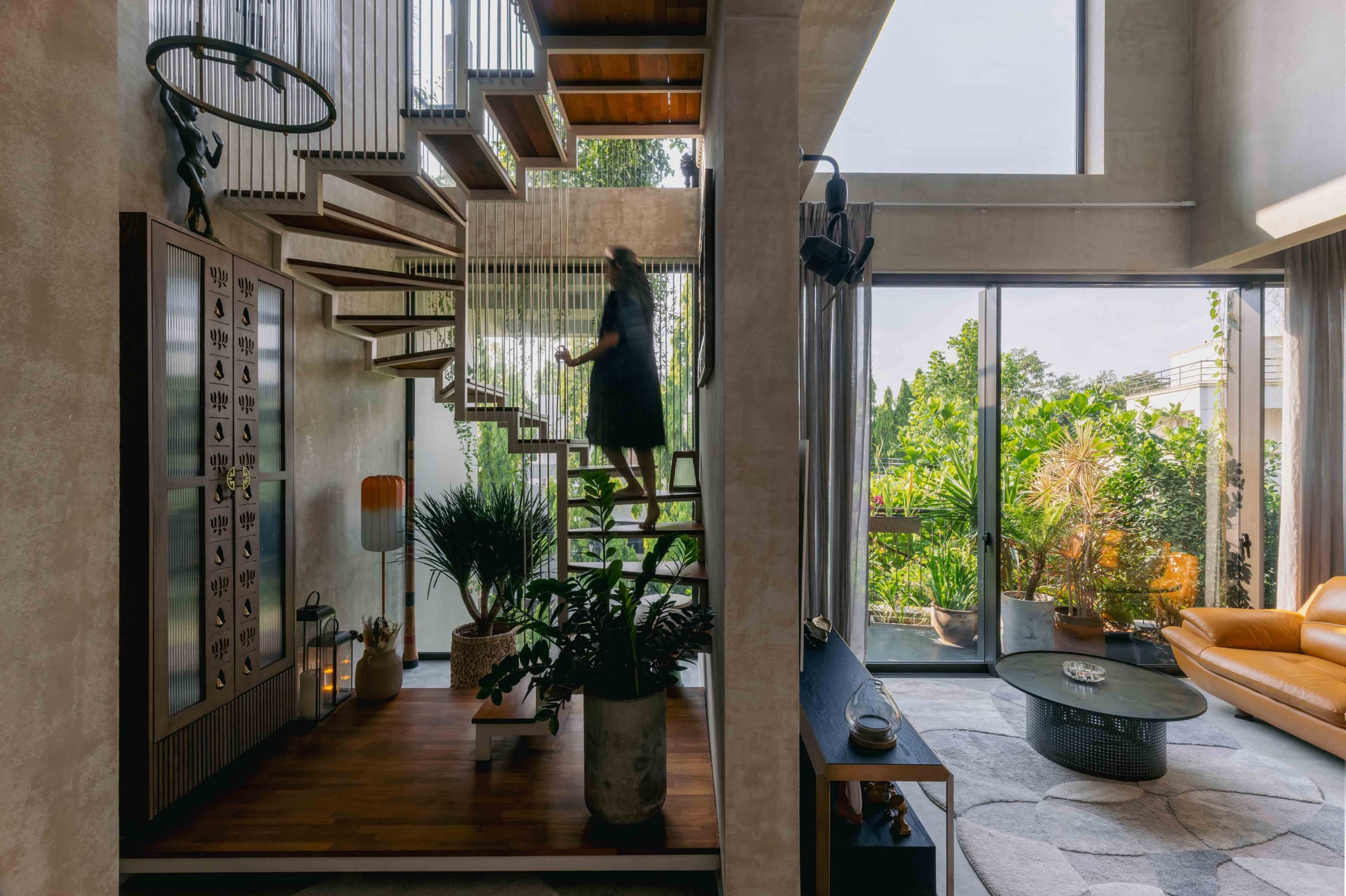
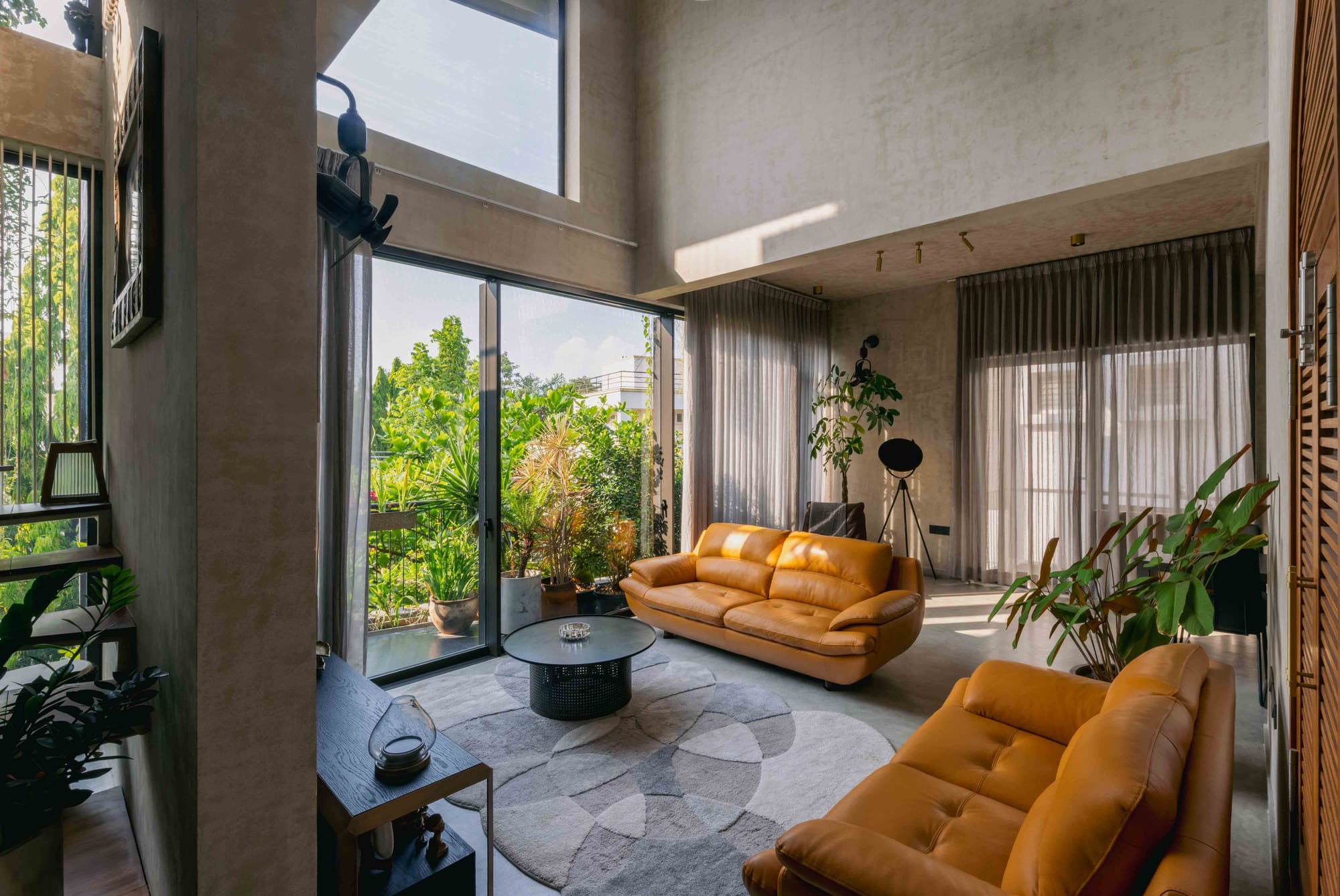
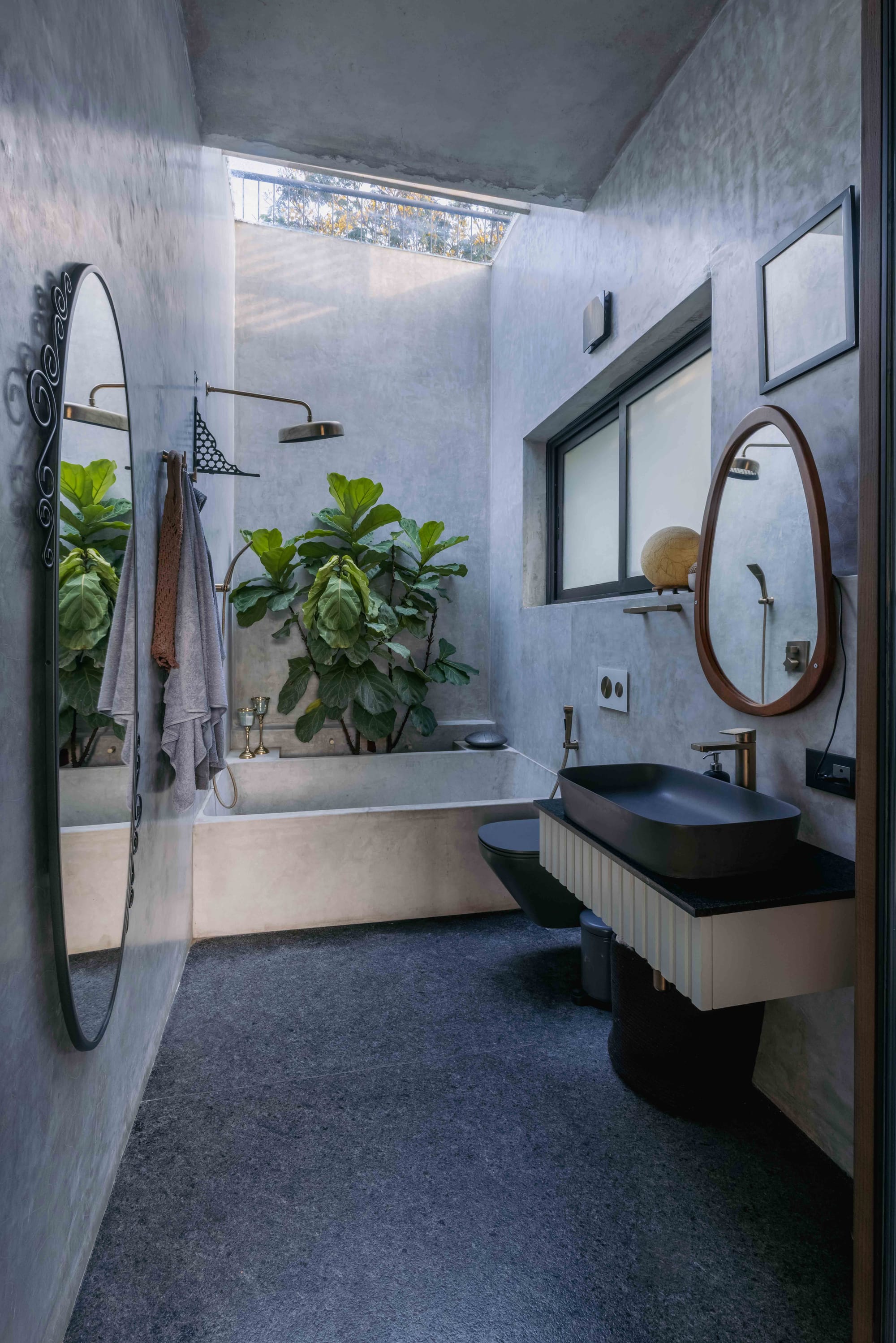
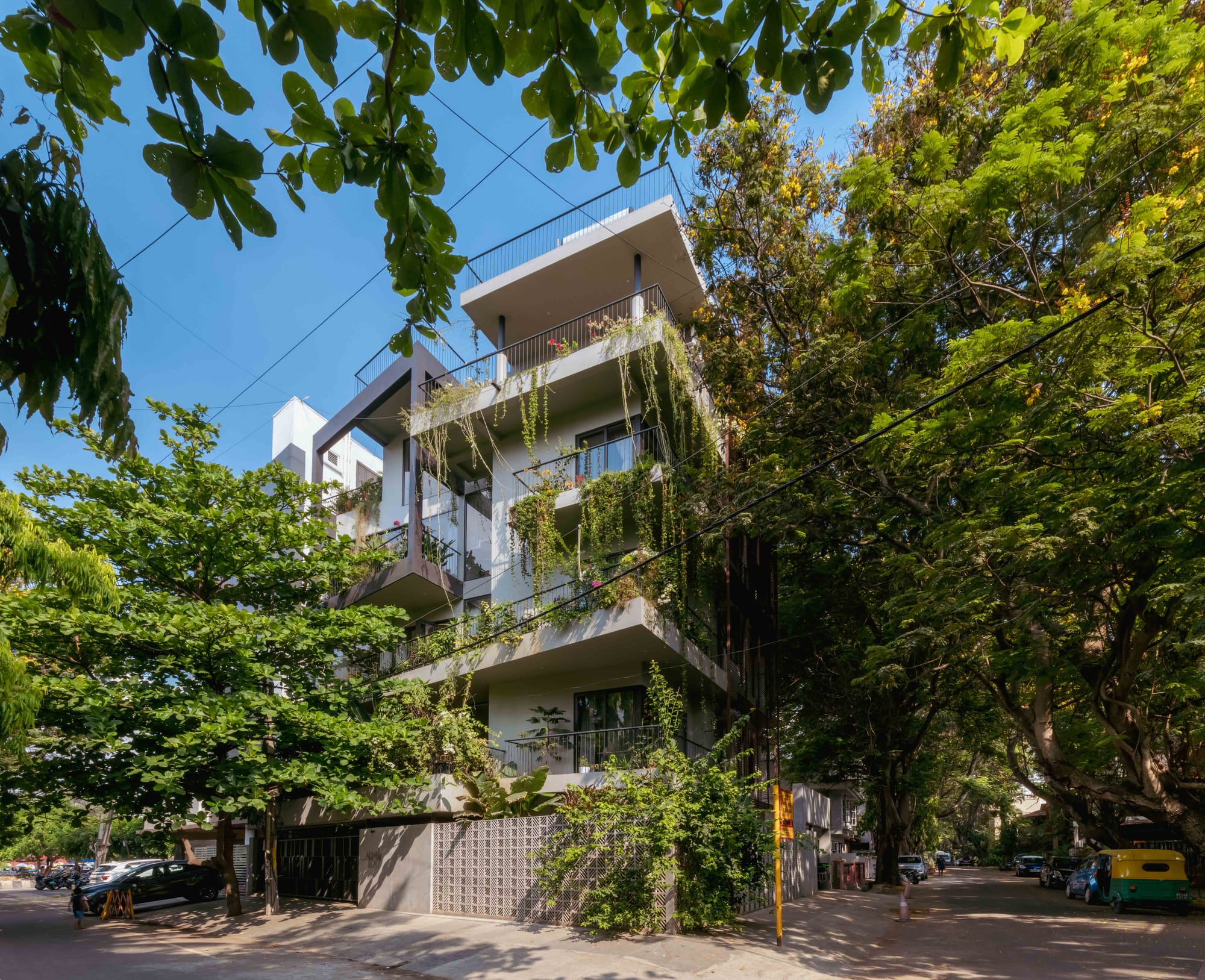
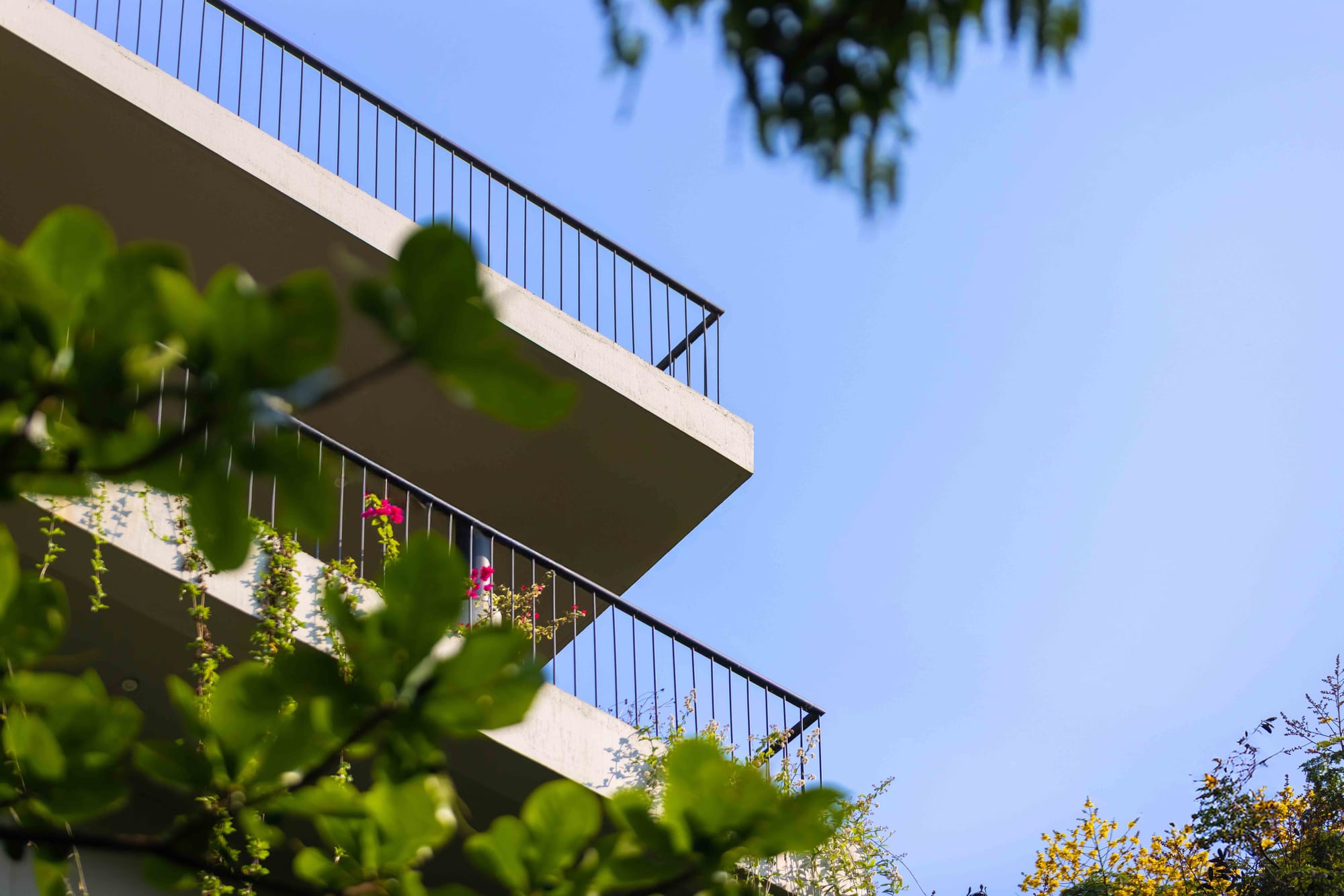
The architectural language responds directly to Bengaluru's climate. Deep cantilevered slabs shade the interiors, generous terraces extend living spaces outdoors, and abundant planting moderates heat gain while softening the building's presence within the dense urban fabric. The integration of landscape at every level blurs the threshold between built form and nature, allowing the house to engage with the mature tree canopy surrounding the site while creating a more comfortable microclimate.
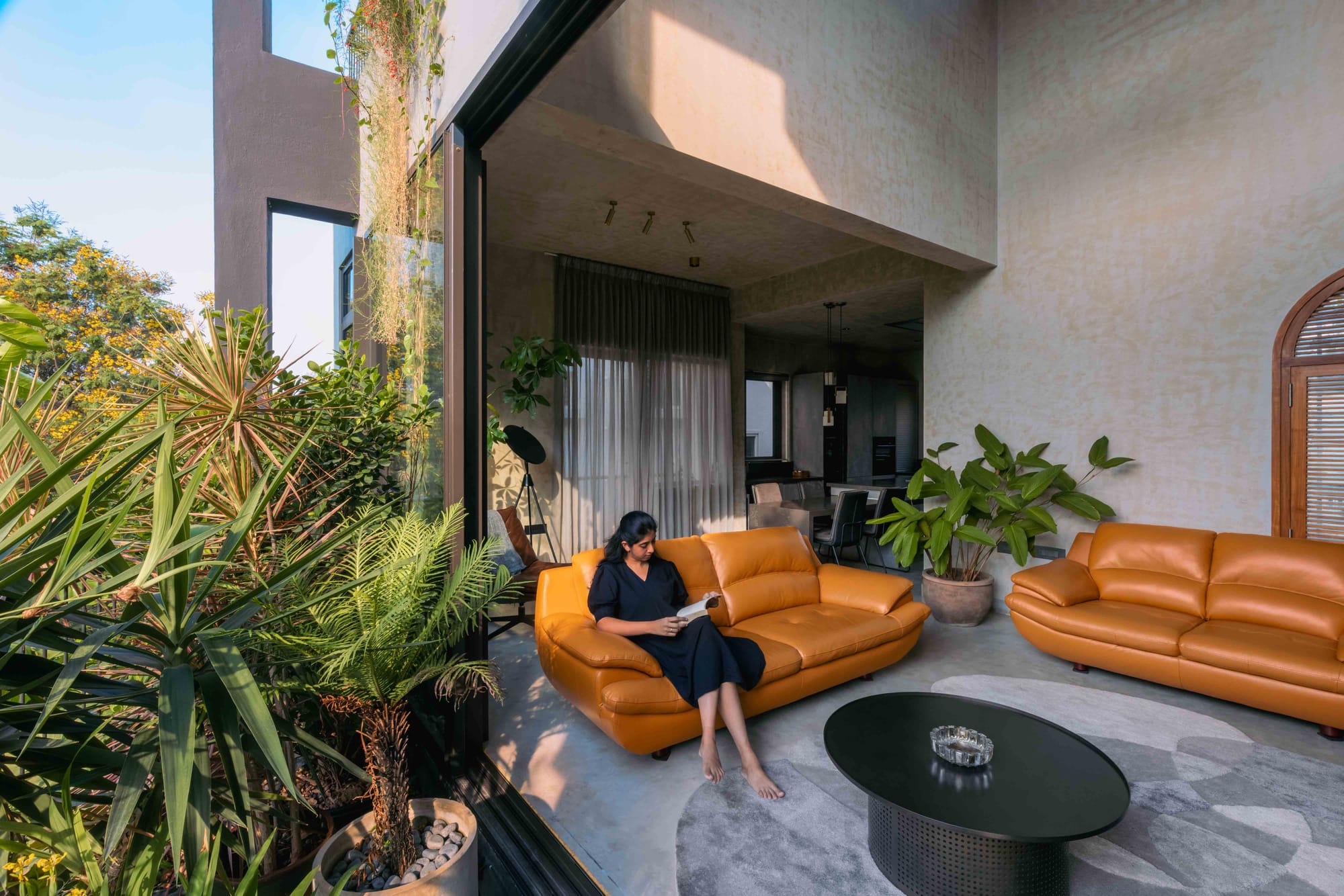
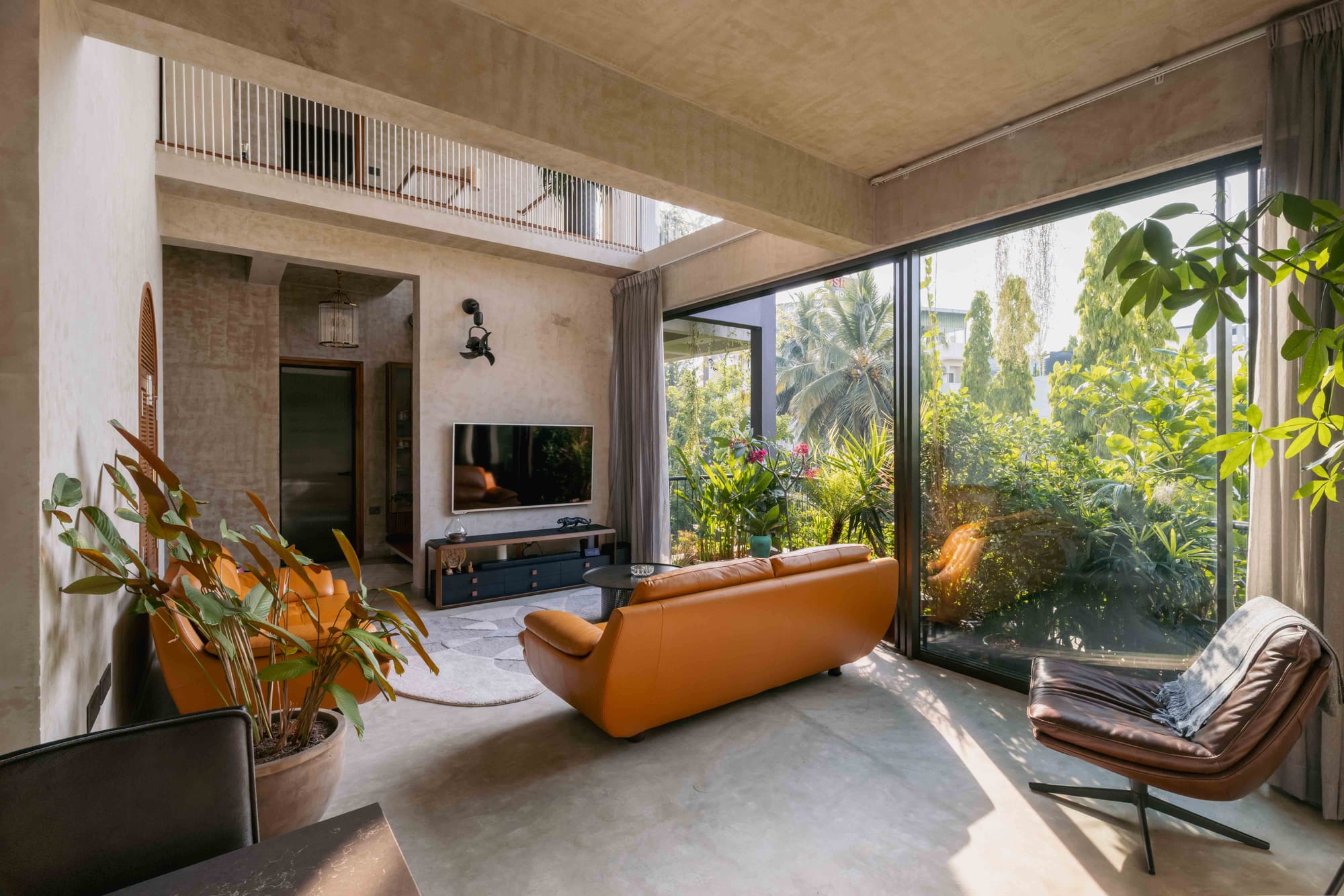
Rather than treating outdoor space as residual, the project makes it the primary organiser of domestic life. Terraces become gardens, circulation becomes a place of encounter, and the spaces between homes become as meaningful as the homes themselves.
AUM House proposes a contemporary model for urban family living where increasing density strengthens, rather than weakens, social relationships. It demonstrates that housing for extended families need not become either oversized villas or anonymous apartment blocks. Instead, the project presents a compact architectural prototype in which shared spaces, visual connections, and carefully balanced independence allow multiple generations to continue living together with dignity, care, and a strong sense of belonging.
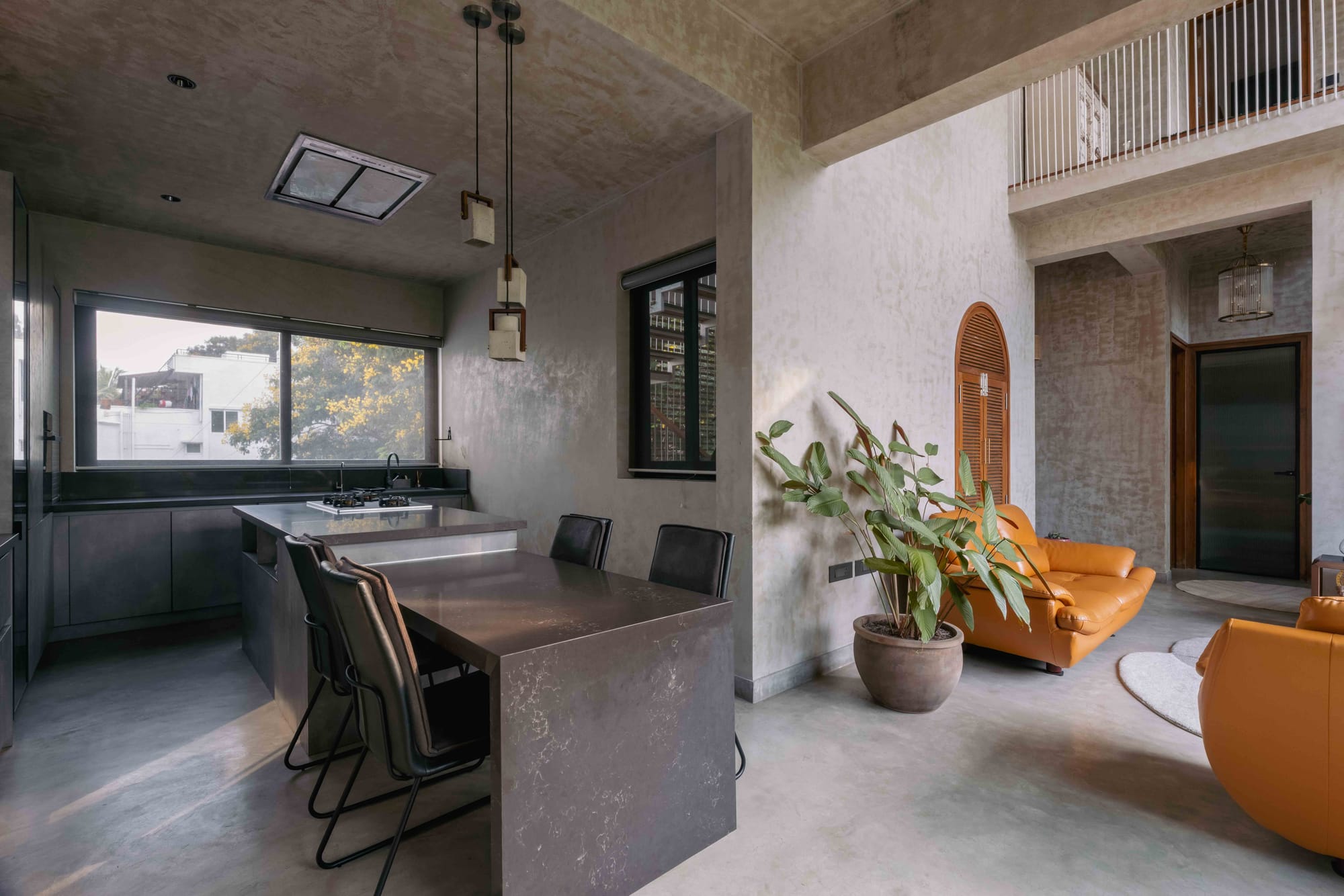
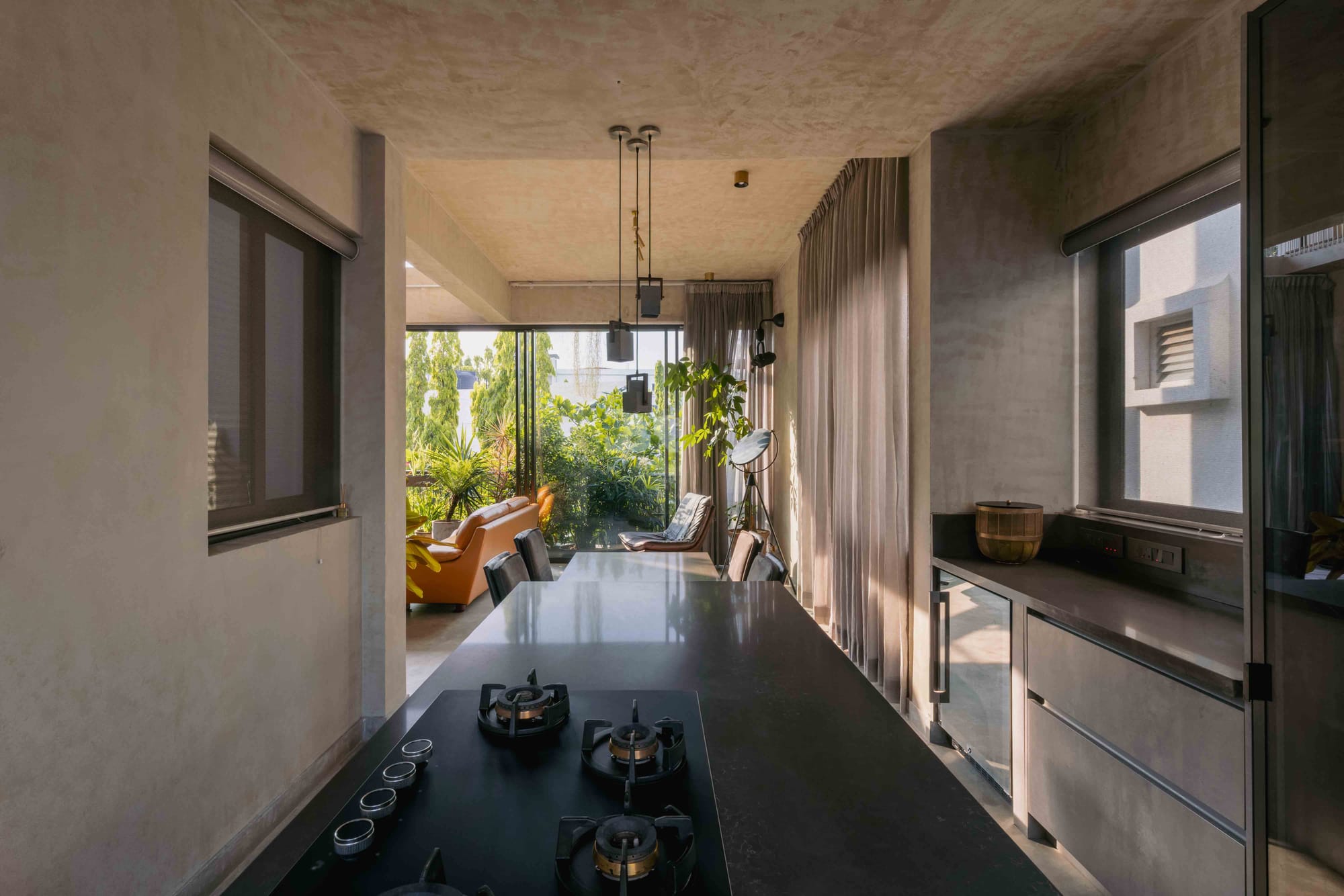
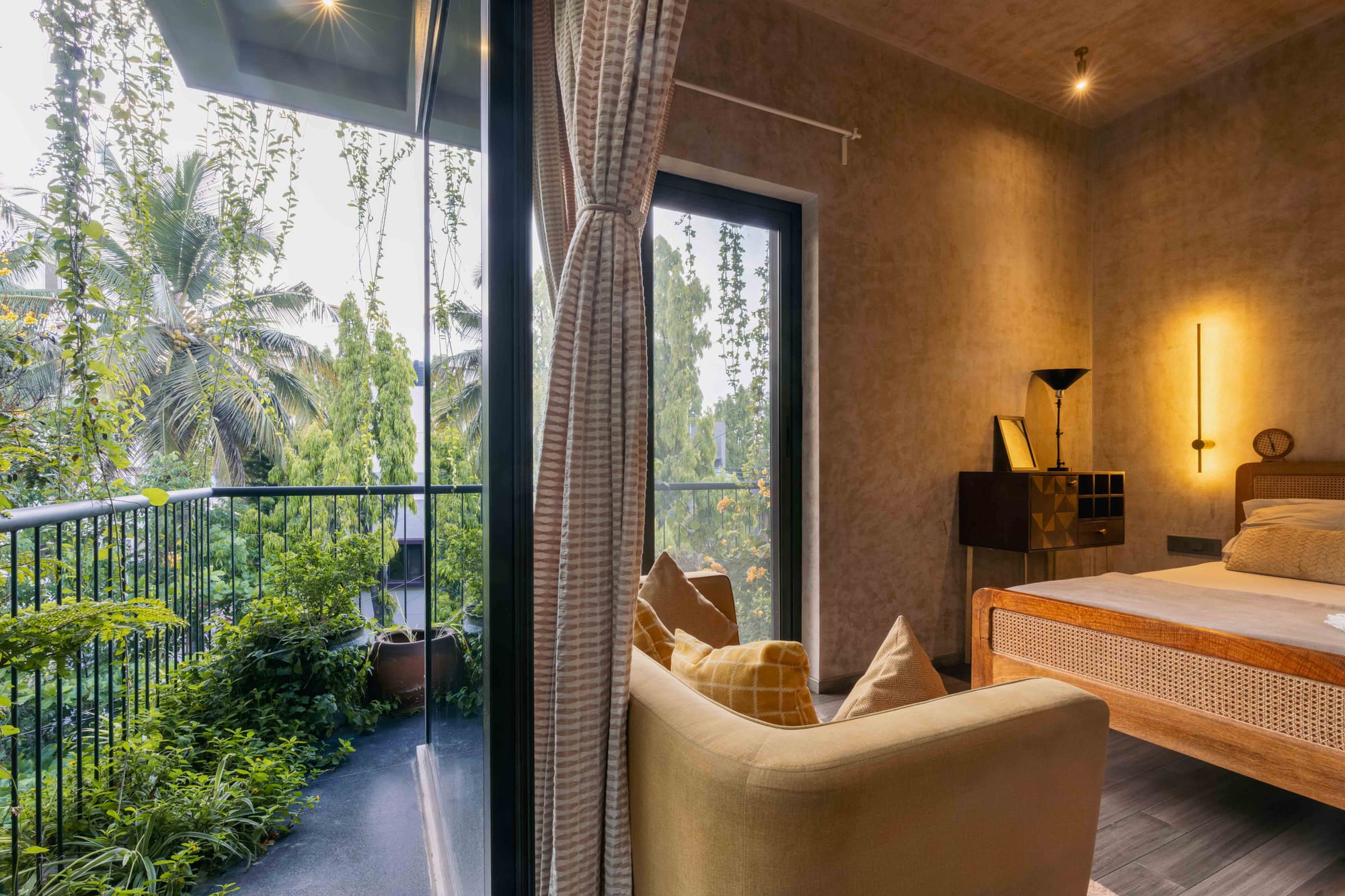
In a time when cities are growing denser and families are growing farther apart, AUM House suggests that the future of urban housing lies not simply in building more, but in building better relationships through architecture.
Credits:
- Structural design - Design Academy, Bengaluru
- Plumbing design - Tekton engineers
- Electrical design - Malabar engineering company
- Lighting design - Apta lighting studio
- Architecture photography - Running studios