
The Green Illusion -
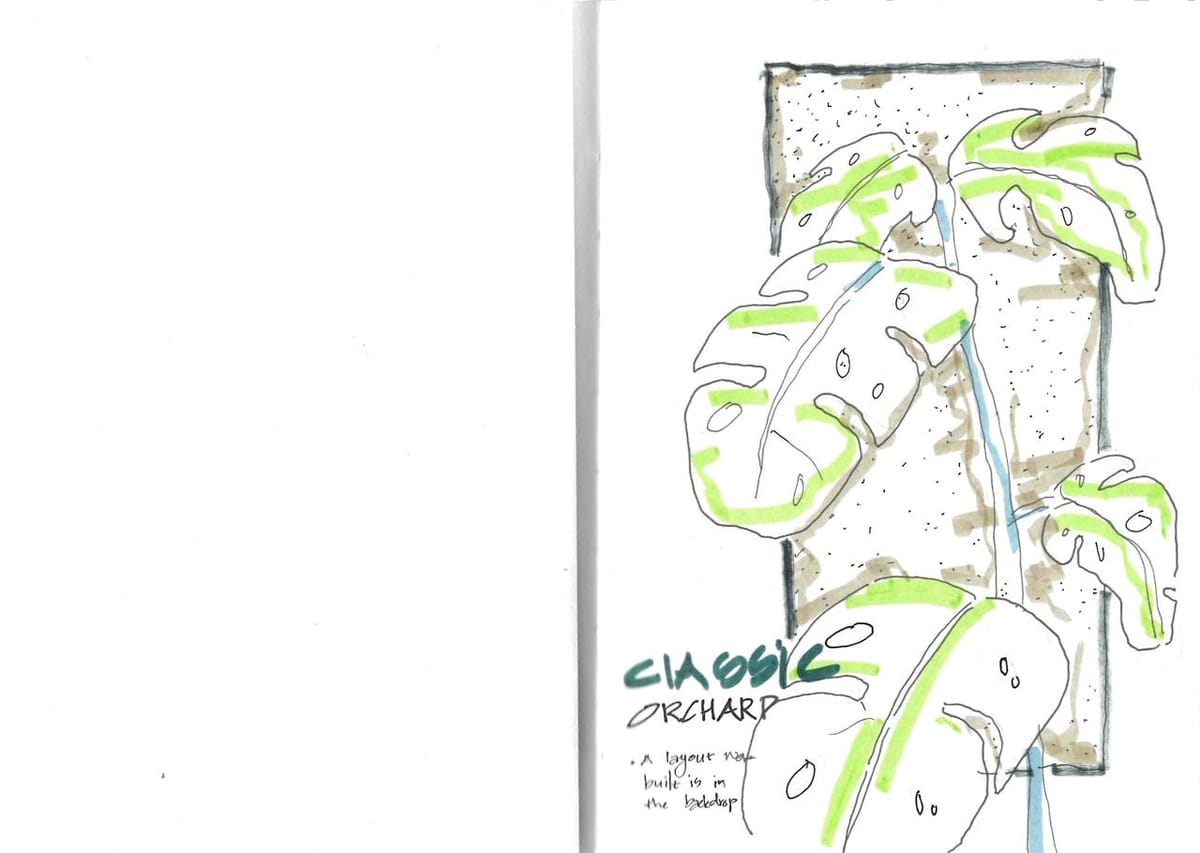
I got to spend four days in Bengaluru recently, staying at my cousin's house in a tree-rich residential layout.
It was one of those rare visits when there was a little time to spare. I could have spent those days doing what I would ordinarily do in a city—visiting places, meeting people, moving from one appointment to another. Instead, I found myself walking beneath the trees, often with my daughter in her stroller.
That, perhaps, was the best part of the visit.
There is something deeply comforting about walking beneath a mature tree canopy, especially the green light filtering through the leaves. My involvement in the design of IPM had made me more conscious of the importance of these everyday environmental experiences in healthcare spaces. Light, shade and the experience of being outdoors are not merely aesthetic considerations; they can influence how we experience a place.
Walking beneath those trees with my daughter, I found myself appreciating something I might otherwise have taken for granted.
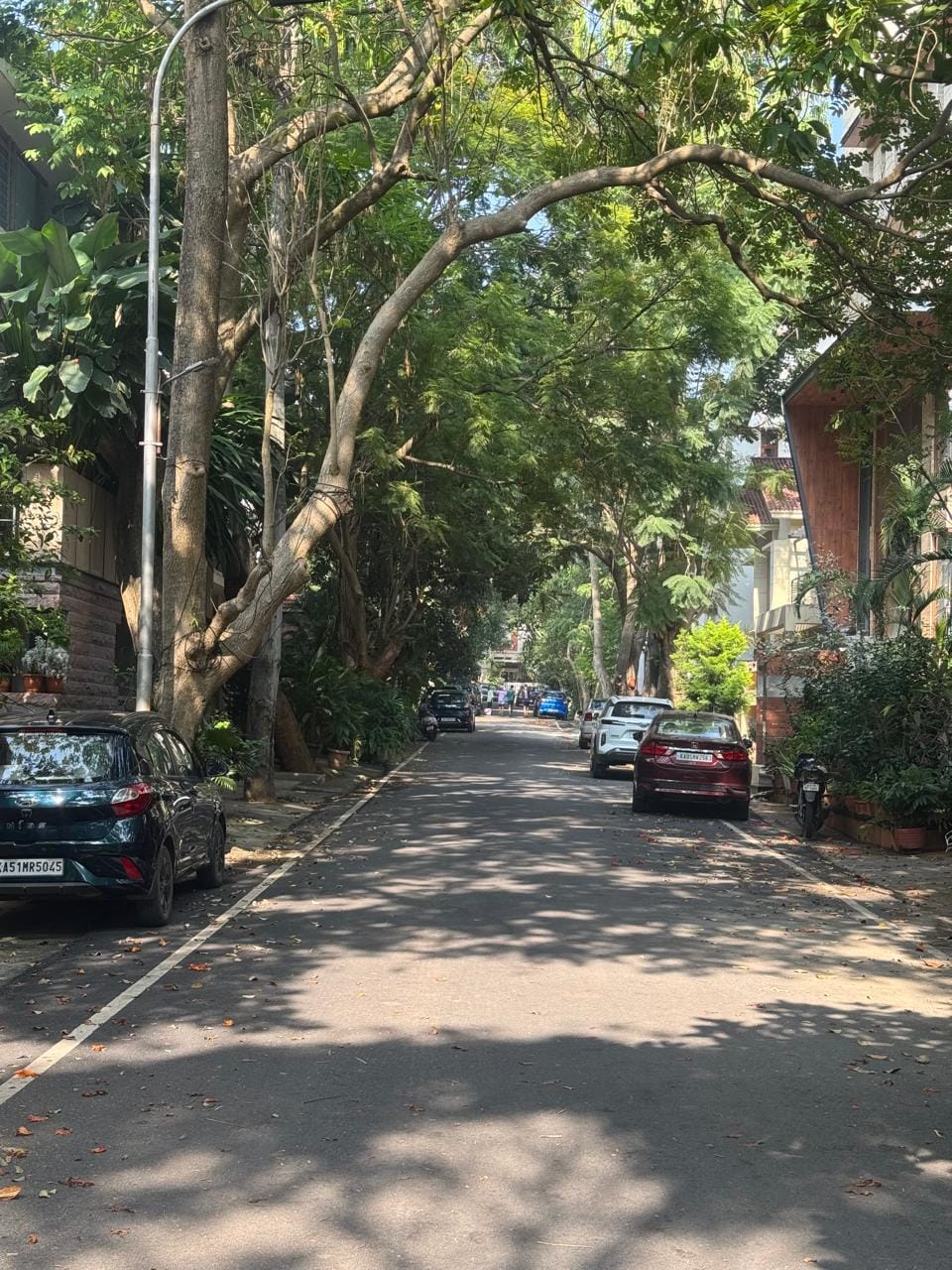
This neighbourhood was, by Bengaluru's standards, a relatively generous green environment with its own micro climate. The trees created a sense of continuity across individual plots, softening the streets and giving the place a distinct character.
And then, with some free time on my hands, I began scribbling, really didn't intend to do this 😄
What started as a few informal sketches gradually turned into an architectural observation. I began looking beyond the trees and paying attention to the buildings beneath them. Despite the abundance of greenery, many buildings appeared to occupy almost the entire extent of their plots, leaving little meaningful space between the built form and the boundaries.
Perhaps this is a familiar condition in our cities. Land is expensive, and the instinct is to extract as much usable area from a plot as possible. The building becomes a calculation of maximum utilisation, while the spaces left unbuilt are often treated as lost opportunity.
But standing beneath that generous canopy, I found myself wondering whether we have begun to measure the value of a site too narrowly.
The canopy was generous. The buildings, it seemed, were not.
That contrast stayed with me.
What does it mean for architecture to coexist with nature when the landscape looks abundant, but the ground beneath it is almost entirely built upon?
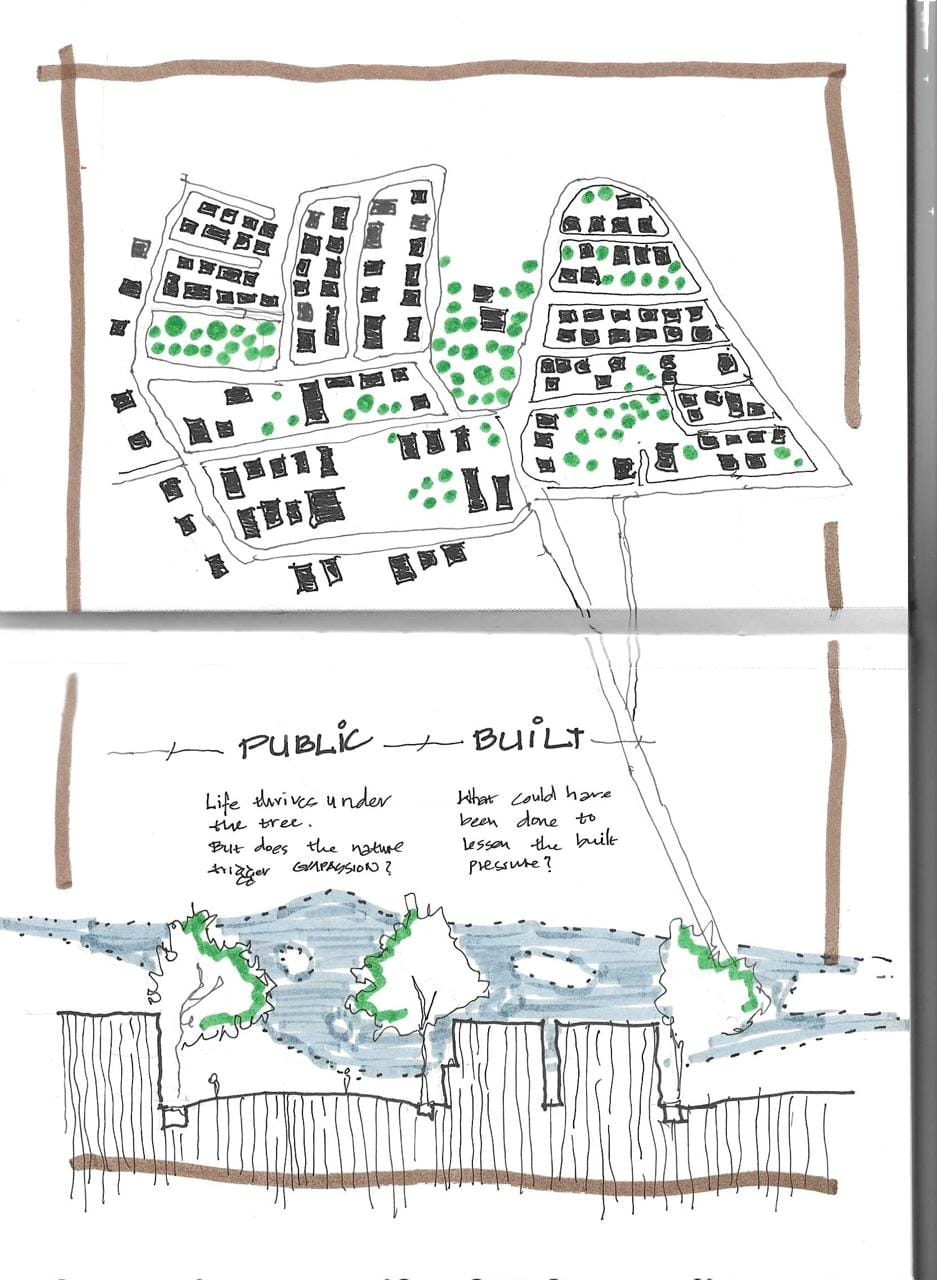
The canopy above, the footprint below
We often judge the environmental quality of a place by what we can see.
A mature tree canopy is visible. Shade is tangible. Green streets are immediately reassuring. These are real qualities, and their value should not be understated.
Yet the canopy tells only part of the story.
A building can sit beneath a tree without having responded to it. A tree can survive beside a building without the building having made meaningful room for it.
The distinction is between the presence of nature and the extent to which architecture accommodates it.
Greenery can soften the appearance of development without necessarily reducing its intensity.
We have become remarkably skilled at asking how much can be built.
We are less comfortable asking how much should remain unbuilt. Perhaps we need to begin asking this question more often.
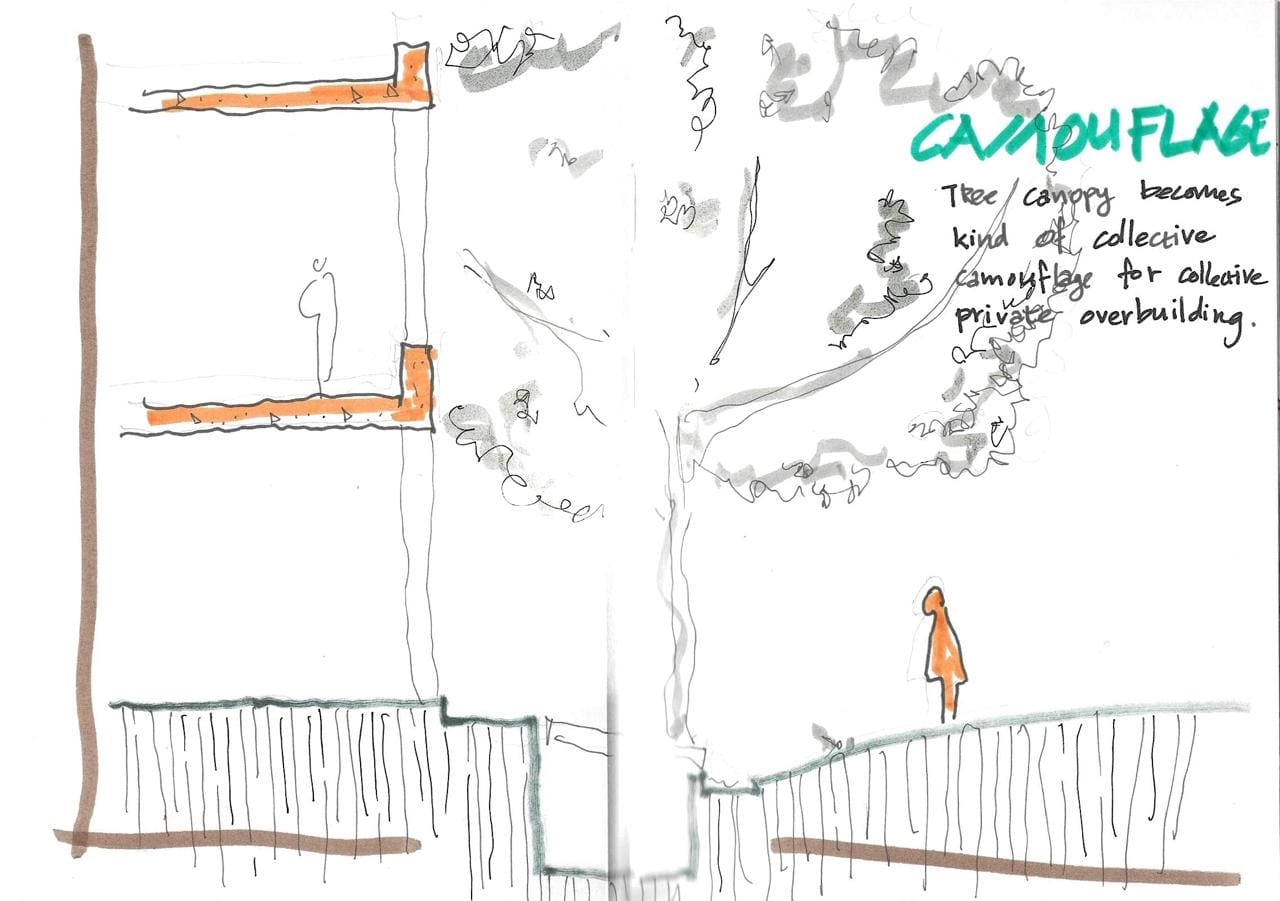
Camouflage
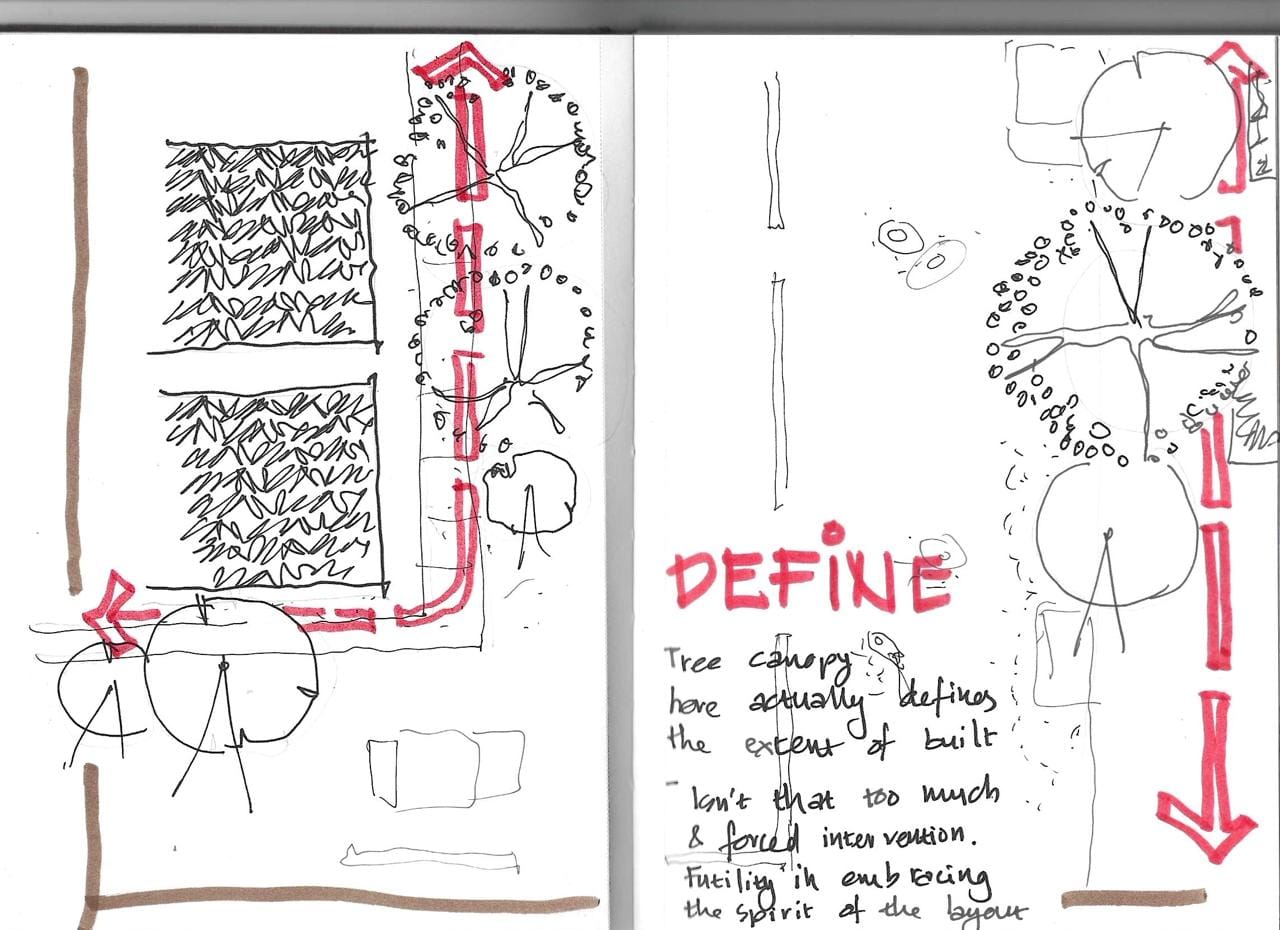
A tree canopy can become a collective camouflage for private development.
There is something valuable about this relationship. Trees soften the city, provide shade and give otherwise fragmented developments a shared identity.
But there is also a contradiction.
The same canopy that gives a place its generosity can make the intensity of its construction less apparent. The landscape becomes the visible face of a built environment whose actual footprint remains largely concealed.
This is not an argument against trees, nor a dismissal of the environmental value of an established green neighbourhood. It is a reminder that visual greenness and spatial generosity are not necessarily the same thing.
We should be careful not to confuse a building that disappears behind trees with a building that has made room for them.
The collective and the individual
A tree grows within a plot, but its canopy rarely respects the boundaries drawn around that plot.
Its shade extends into the street. Its branches overlap those of neighbouring trees. Together, individual trees create a collective landscape that no single property owner could produce alone.
Architecture, meanwhile, is often conceived and constructed one plot at a time.
This creates an interesting imbalance. The landscape works collectively, while the pressure to build operates individually. Each plot may be treated as a separate opportunity for construction, yet the cumulative consequences determine the character of the entire place.
What if the landscape came first?
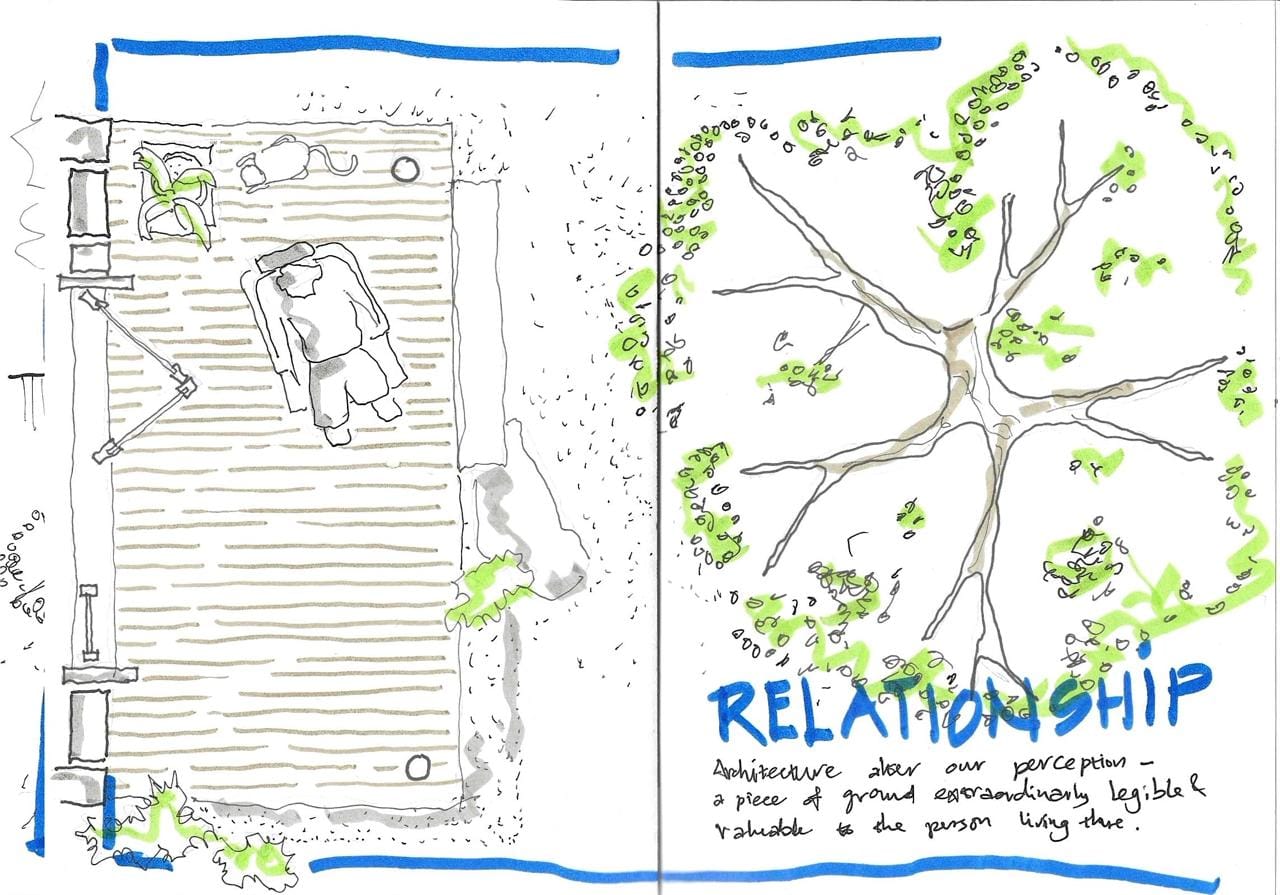
Imagine beginning a design not with the permissible building envelope, but with an understanding of the existing trees, the ground they occupy, the movement of water and the relationships between spaces.
The buildings would then emerge from a different set of priorities.
Their footprints might shift. Their extents might reduce. Their organisation might respond to the landscape rather than treating it as something to accommodate after the building has been resolved.
This is not a prescription for a particular architectural form. It is a different sequence of decisions.
First, understand what already exists. Then identify what deserves to remain. Only then determine the appropriate extent of intervention.
Such an approach does not reject development. It asks development to recognise that a site has value beyond its capacity to accommodate built area.
The architecture of restraint
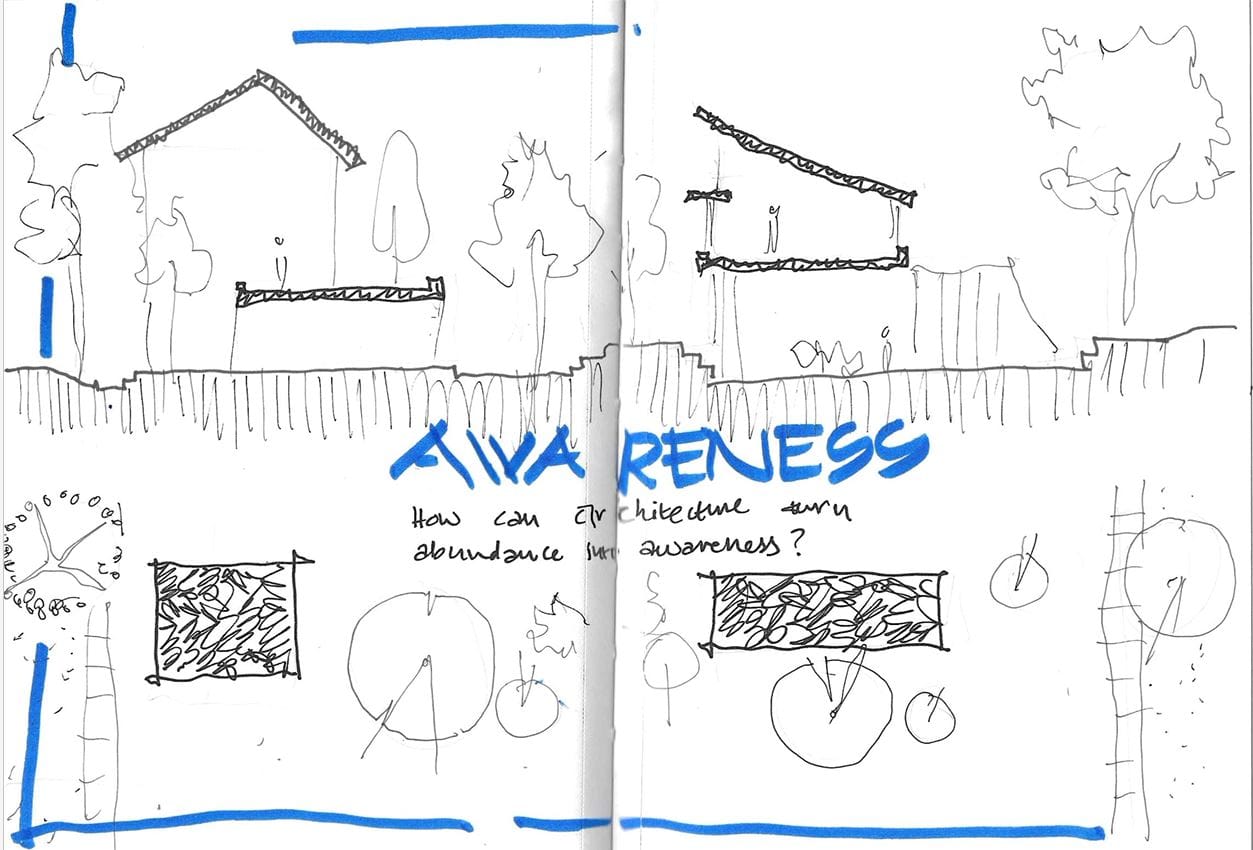
Perhaps the most difficult architectural decision is knowing when to stop.
We tend to associate design ambition with what is added: the programme accommodated, the area constructed, the form created. But there is another kind of ambition in recognising the value of what is already present and resisting the impulse to occupy every available part of a site.
Restraint is not the absence of architecture. It is an active decision about the limits of its presence.
Looking back, I am glad I had those four days to walk, observe and draw. What began as a simple pleasure—walking beneath the trees with my daughter—became a question I haven't quite been able to shake off.
A place can be green and still be overbuilt. Trees can remain visible while the space left for the landscape at ground level becomes increasingly limited.
Perhaps we need to think of the unbuilt portions of a site not as lost development potential, but as an essential part of what makes a place worth living in.
After all, architecture is defined not only by what we choose to build, but also by what we choose to leave behind.